Who are the X-Men
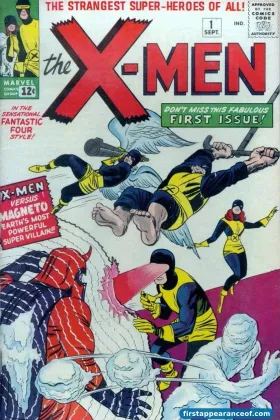
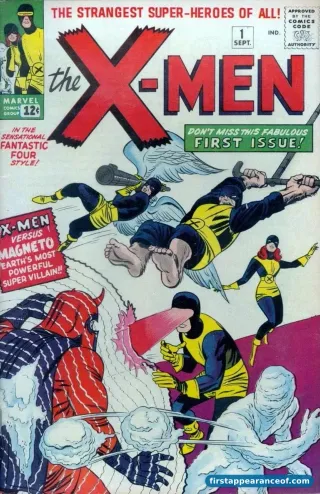
The X-Men are Marvel’s mutants: people born with powers, schooled by Charles Xavier, and fighting to protect a world that would rather they did not exist. Stan Lee and Jack Kirby created them in The X-Men #1, cover-dated September 1963.
The team almost nobody pictures is the one that actually debuted. The X-Men are defined less by a fixed lineup than by how often the lineup turns over, so their story is best told in eras.
The original five (1963 to 1970)
Roster: Cyclops, Marvel Girl, Beast, Angel, and Iceman, under Professor X.
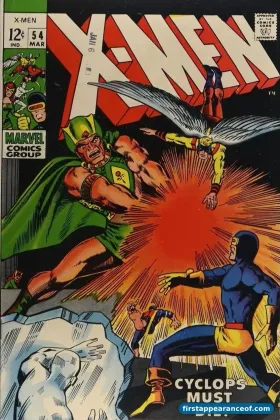
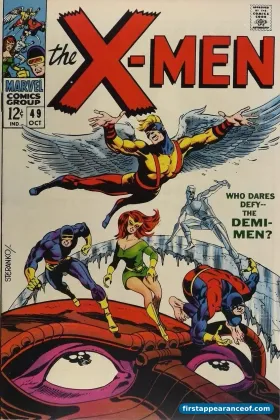
Lee and Kirby built the book on a hated minority and a teacher who preached coexistence, which read as a civil-rights parable in 1963. Magneto, the separatist answer to Xavier, arrived in the same first issue. It did not sell. By 1970 the title had run out of new stories and dropped to reprints with issue #66. For five years the X-Men were Marvel’s also-rans.
The all-new, all-different team (1975)
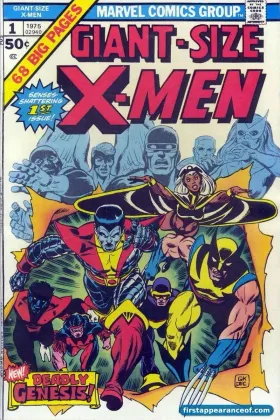
Roster: Cyclops stays; Storm, Nightcrawler, Colossus, Wolverine, and Thunderbird join.
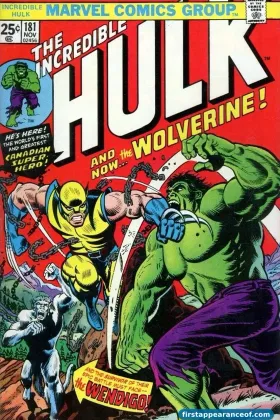
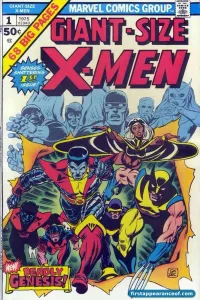
Giant-Size X-Men #1 (1975), written by Len Wein and drawn by Dave Cockrum, rebuilt the team as an international cast: a Kenyan, a German, a Russian, a Canadian, and an Apache. Wolverine had wandered over from The Incredible Hulk #181 the year before. Thunderbird barely lasted; his first appearance here is nearly his last, killed a few issues into the new run. This relaunch is the hinge the whole franchise turns on.
The Claremont era (1975 to 1991)
Roster: Kitty Pryde joins in 1980, Rogue in 1983; Wolverine moves to the center.
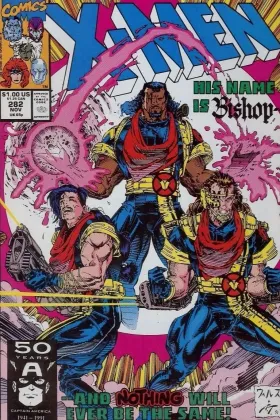
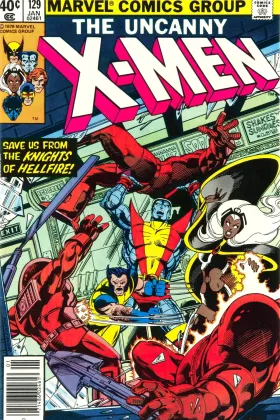
Chris Claremont took over the renumbered ongoing at X-Men #94 and wrote it for sixteen straight years, long enough that the X-Men most people picture, Wolverine out front, is essentially his. The Dark Phoenix Saga (X-Men #129 to #138, 1980) and Days of Future Past (#141 to #142, 1981) are the landmarks, both adapted on screen more than once since. His run ended with X-Men #1 (1991), drawn by Jim Lee, which sold roughly eight million copies and is still the best-selling single comic book on record. He left within months of the issue that crowned the run.
The X-line expansion (1982 onward)
Spin-offs: New Mutants, X-Factor, Excalibur, X-Force, Generation X.
Success bred titles. The New Mutants (1982) gave Xavier a junior class, X-Factor (1986) reunited the original five, and X-Force, Excalibur, and Generation X followed. By the early 1990s the X-books were Marvel’s commercial engine, several of the company’s top sellers concentrated in one line.
Krakoa and the modern era (2019 to now)
Roster: the entire mutant race, relocated to the living island of Krakoa.
Jonathan Hickman’s House of X and Powers of X (2019) changed the premise rather than the lineup. Mutants stopped asking for a place in the human world and founded their own nation on the living island Krakoa, with their own laws, their own economy, and a way to cheat death. It was the biggest reset since 1975, and it put the X-Men back at the center of Marvel’s publishing.
Notable issues
- The X-Men #1 (1963): first appearance of the X-Men and of Magneto.
- The Incredible Hulk #181 (1974): first full Wolverine. Not an X-Men book, but the line’s most valuable key.
- Giant-Size X-Men #1 (1975): the all-new team; first Storm, Nightcrawler, and Colossus, and the debut of Thunderbird.
- X-Men #94 (1975): the new team’s ongoing begins, and Chris Claremont’s run starts here.
- X-Men #129 (1980): first Kitty Pryde and Emma Frost; the Dark Phoenix Saga opens.
- X-Men #1, vol. 2 (1991): Claremont and Jim Lee; the best-selling single comic book on record.
- House of X #1 (2019): the Krakoa era begins.
For collectors
No team carries more blue-chip keys. The X-Men #1 (1963) is the first team and the first Magneto. Giant-Size X-Men #1 (1975) is the relaunch and the first Storm, Nightcrawler, and Colossus. The most valuable of all sits outside the X-Men’s own titles: The Incredible Hulk #181 (1974), the first full Wolverine, which has ranked among the top modern keys for years.