Creation Story
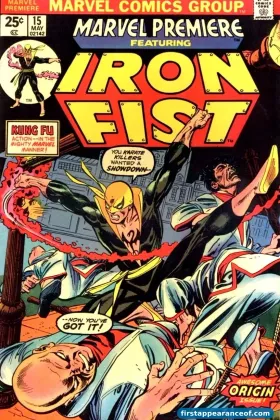
By summer 1977 Iron Fist was circling cancellation. The Danny Rand solo title had struggled for an audience since launching out of Marvel Premiere, and Marvel had just announced that Iron Fist would be rolled into a team-up book (Power Man and Iron Fist) starting that fall. Iron Fist #15 would be the final issue of his first ongoing, with the current issue, #14, two months out from the end.
Chris Claremont and John Byrne were the creative team. This was before their run on Uncanny X-Men made them the defining Marvel collaboration of the late 1970s and early 1980s. Claremont had taken over X-Men at #94 in 1975, but the book had not yet achieved the momentum that Dark Phoenix and Days of Future Past would bring. Both Claremont and Byrne were still treated by Marvel as utility creators, rotating across multiple titles.
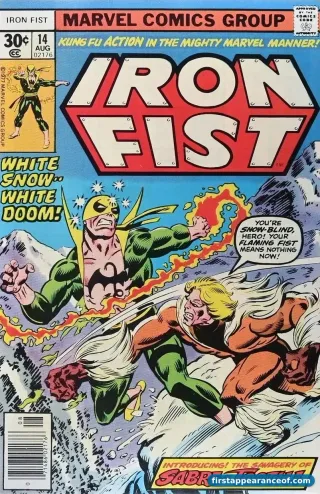
Into the dying issues of Iron Fist, they dropped a character named Sabretooth: a cat-themed assassin with long fangs, claws, and feral intensity, hired by Big Brother (a faceless gangland figure, not a Marvel villain anyone would remember) to kill Iron Fist. Creed arrives in the last third of the issue, brawls Danny Rand, escapes. That’s the entire debut. There is no origin, no Weapon X backstory, no Wolverine connection. Not even a clear mutant framing. Sabretooth is simply a hitter.
Claremont has said in interviews that Creed was designed as a potential recurring Iron Fist antagonist who would pivot back to being a mutant villain once the team had a book that could support him. The cancellation of Iron Fist interrupted that plan. Sabretooth does not appear again for almost three years.
Iron Fist #14 — First Appearance and First Cover
The issue is built around Danny Rand’s pursuit of the man who killed his father, set against the backdrop of a mob-run New York. Sabretooth enters at page sixteen: a tall, lean figure in a yellow-and-brown costume with a flowing mane and exaggerated fangs. Byrne’s design leans into an anthropomorphic-cat aesthetic that owes more to Kraven the Hunter and Bronze Age Shocker villains than to the gritty, animalistic Sabretooth of later X-Men issues. The violence is controlled; Creed taunts, swipes, feints. Iron Fist survives the encounter and Sabretooth escapes.
Iron Fist #14 was published into a Bronze Age market that paid little attention to it. Print runs for the title were modest at the point of cancellation, and early copies circulated without any premium. The issue sat in dollar bins and collections for years. It was not recognized as a key until Sabretooth’s re-emergence in the Mutant Massacre in 1986 and his eventual establishment as one of Wolverine’s most persistent enemies.
By the early 2000s Iron Fist #14 had begun to command triple-digit premiums in higher grades. The Tyler Mane casting in the 2000 X-Men film and the Liev Schreiber casting in X-Men Origins: Wolverine (2009) pushed the book into four-figure territory at CGC 9.6 and above. CGC 9.8 copies now regularly exceed $5,000 at auction. The direct-to-retailer variant discussion does not apply: in 1977 the direct market had only just launched (Phil Seuling’s Sea Gate Distribution began shipping direct-market-only issues that same year), and the standard/newsstand/direct-variant split that defines Copper and Modern Age keys does not yet apply to Iron Fist #14.
The Weapon X and Wolverine Connections
The backstory that most contemporary readers associate with Sabretooth — his shared history with Wolverine, his tenure in the Weapon X program, his designation as Team X alongside Logan and Maverick — is entirely retroactive. None of it is present in Iron Fist #14 or in his 1980 second appearance in Power Man and Iron Fist #66.
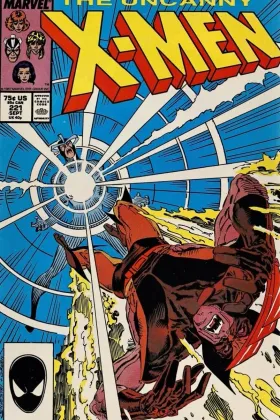
The Wolverine connection begins being seeded in Uncanny X-Men #212 to #214 (1986 to 1987), during the Mutant Massacre, when writer Claremont (now the definitive X-Men writer) picks up the character he created nine years earlier and folds him into the X-line. The Weapon X backstory lands properly in Barry Windsor-Smith’s Weapon X serial in Marvel Comics Presents #72 to #84 (1991) and the subsequent Wolverine: Origin (2001 to 2002). The claim that Creed is Logan’s half-brother is a film-continuity invention from X-Men Origins: Wolverine (2009) that has never been canonical in the mainstream comics.
Legacy
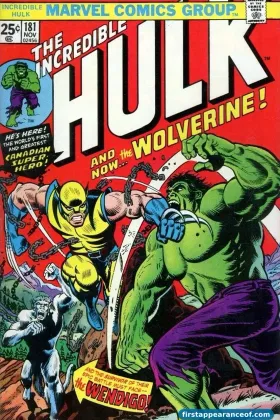
For collectors, Iron Fist #14 is the Bronze Age equivalent of Incredible Hulk #180: a secondary book that unexpectedly became the single first appearance of a major character because the publisher found a way to make that character matter a decade later. The parallel is fitting. Both characters were introduced in the final issues of doomed titles, both were designed by Marvel’s most important creators of the era in roles that did not seem important at the time, and both became keystone Wolverine-adjacent figures once Claremont had a platform that could carry them.