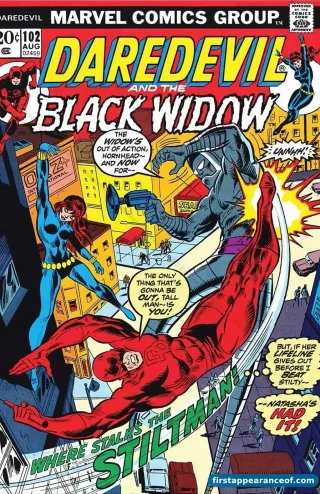
Daredevil #102 (1973), Marvel Comics. Chris Claremont's first professional scripting credit.

1st Scripting Work

First Appearance of Chris Claremont

Daredevil #102

August 1973 · Marvel

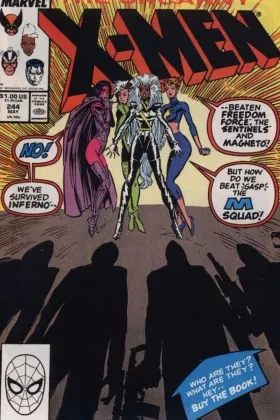
The writer of Uncanny X-Men for sixteen straight years, who turned a cancelled team into Marvel's best-seller and co-created Rogue, Gambit, Mystique, Kitty Pryde, and most of the modern X-roster.

By Atomm Updated

Marvel Comics Writer Active 1969–present The writer who built the modern X-Men.

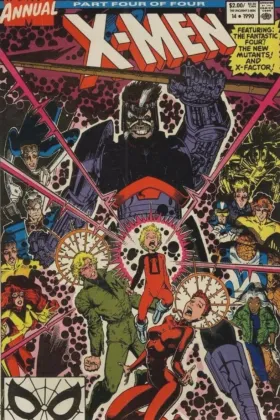
Chris Claremont's first professional comic script is Daredevil #102 (August 1973). Born in 1950, he is best known for writing Uncanny X-Men from issue #94 (1975) to 1991, a sixteen-year run that made the X-Men Marvel's best-selling franchise. He co-created Rogue, Gambit, Mystique, Kitty Pryde, Sabretooth, Emma Frost, and much of the modern X-roster, and wrote landmark stories including the Dark Phoenix Saga and Days of Future Past.

Firsts Timeline

  1. Daredevil #102 cover
    First Scripting Work August 1973

    Daredevil #102

    By Chris Claremont

    Claremont's first professional script. He had been at Marvel since 1969 as a gofer and editorial assistant, picking up a plot-assist credit on X-Men #59 (1969), but Daredevil #102 is his first full scripting assignment.

    Read the full breakdown
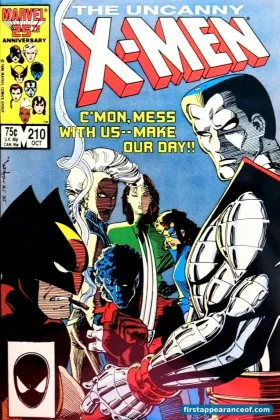
  2. Uncanny X-Men August 1975

    X-Men #94

    By Chris Claremont, Dave Cockrum

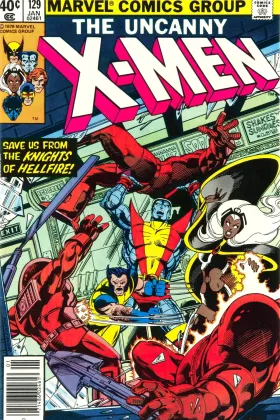
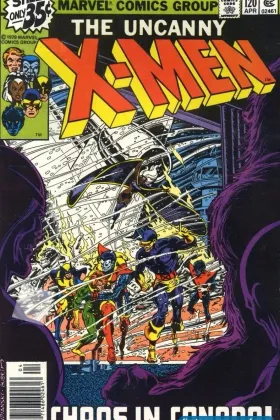
    Claremont takes over the X-Men with issue #94, beginning a sixteen-year run (to 1991) longer than any other writer on the title. He turned a book Marvel had stopped producing new stories for into its single best-selling franchise.

    Read the full breakdown
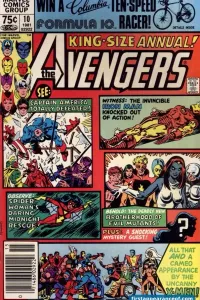
  3. Avengers Annual #10 cover
    Rogue, Gambit, the modern X-roster 1981

    Avengers Annual #10

    By Chris Claremont, Michael Golden

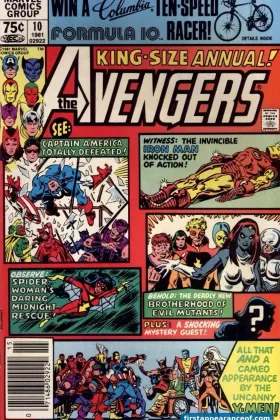
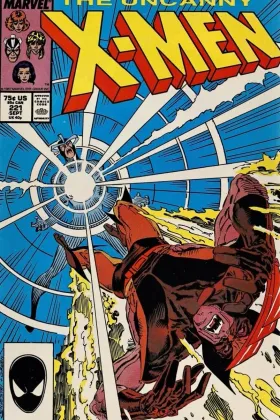
    Across his run Claremont co-created a huge share of the modern X-Men cast: Rogue (Avengers Annual #10, 1981), Gambit, Mystique, Kitty Pryde, Sabretooth, Emma Frost, Mister Sinister, Psylocke, and Jubilee among them. Few writers have introduced so many durable characters in one franchise.

    Read the full breakdown

Who is Chris Claremont

Chris Claremont wrote Uncanny X-Men for sixteen straight years, and that single fact explains most of what the X-Men are today. When he took the book over in 1975 it was a title Marvel had stopped producing new stories for, running reprints. When he left in 1991 it was the best-selling comic in America and the engine of Marvel’s whole franchise. Born in London in 1950, he co-created so much of the modern roster, Rogue, Gambit, Mystique, Kitty Pryde, that the X-Men line is in large part a list of his characters.

First scripting work: Daredevil #102

Claremont's first professional script is Daredevil #102 (August 1973). He had been around Marvel since 1969, hired as a gofer and editorial assistant while still a college undergraduate, and picked up a plot-assist credit on X-Men #59 that year. But the full writing assignment on Daredevil #102 is where the career proper starts, two years before the book that would define him.

Uncanny X-Men, 1975 to 1991

Claremont took over Uncanny X-Men with issue #94 (1975), shortly after [Giant-Size X-Men #1](/groups/x-men/) had relaunched the team with a new international lineup. He then stayed for sixteen years, the longest run any writer has had on the title. Over that stretch he did the thing superhero comics almost never allow: sustained, slow-burn character work, plot threads that paid off years later, and a cast that grew and changed under one consistent authorial hand.

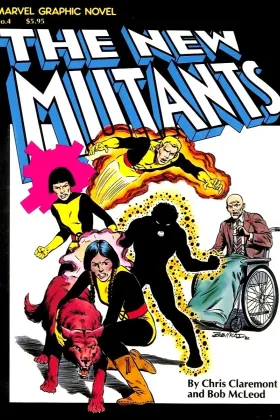
The commercial result is hard to overstate. The X-Men went from cancellation-adjacent to the center of Marvel’s business, and the line’s expansion into spin-offs, New Mutants, X-Factor, Excalibur, all grew out of his run.

The characters and the landmark stories

The roster Claremont co-created is staggering for one writer on one franchise: [Rogue](/characters/rogue/), [Gambit](/characters/gambit/), [Mystique](/characters/mystique/), [Kitty Pryde](/characters/kitty-pryde/), Sabretooth, Emma Frost, Mister Sinister, Psylocke, Rachel Summers, and [Jubilee](/characters/jubilee/) among them. He also wrote the two X-Men stories the wider world knows: the Dark Phoenix Saga and Days of Future Past, both adapted and re-adapted across film and animation.

Chris Claremont’s Impact on Comics

Most superhero franchises are built by many hands over many decades. The modern X-Men were built mostly by one writer over sixteen consecutive years, which is why they hold together as a single sprawling story in a way few comic universes do. Claremont proved that a superhero book could reward long-term reading, that subplots could simmer for years, and that a team title could carry real character development. For collectors, the first appearances scattered through his run, Rogue, Gambit, and the rest, are among the most chased Bronze and Copper Age keys.
Frequently asked questions

The questions readers and collectors ask most.

What was Chris Claremont's first comic?

His first professional script is Daredevil #102 (August 1973). He had joined Marvel in 1969 as an editorial assistant and earned an early plot-assist credit on X-Men #59 that year, but Daredevil #102 is his first full writing assignment.

Why is Chris Claremont important to the X-Men?

He wrote Uncanny X-Men continuously from 1975 to 1991, the longest run any writer has had on the title, and turned a book that had been running only reprints into Marvel's best-selling franchise. The modern X-Men, as characters, themes, and tone, are largely his invention.

What characters did Chris Claremont create?

He co-created a large share of the modern X-roster: Rogue, Gambit, Mystique, Kitty Pryde, Sabretooth, Emma Frost, Mister Sinister, Psylocke, Rachel Summers, and Jubilee, among others. He also wrote the Dark Phoenix Saga and Days of Future Past, two of the most-adapted stories in superhero comics.

Lore Chris Claremont is credited on

6 in the archive