What the Phoenix Force is
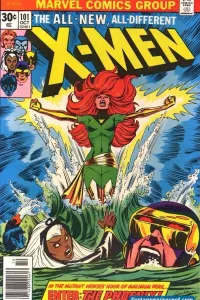
Chris Claremont and Dave Cockrum introduced the Phoenix in X-Men #101 (October 1976). The setup is in X-Men #100, where Jean Grey is exposed to cosmic radiation while piloting a damaged shuttle. The full appearance is in #101, where Jean emerges from the wreckage in Jamaica Bay and declares ‘I am Phoenix.’ The Cockrum cover for #101 — Jean rising from the water with the Phoenix flame surrounding her — is one of the most-recognized X-Men images of the Bronze Age.
The 1976 framing was straightforward. The Phoenix was Jean Grey’s latent telepathic potential, expanded by cosmic-radiation exposure into something far more powerful than she had ever wielded. There was no suggestion of a separate entity. The Phoenix was Jean.
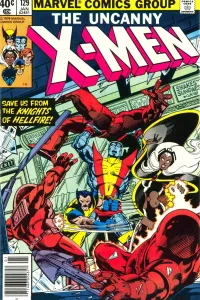
That framing held for nine years. Across X-Men #101 to #137, the Phoenix was Jean’s identity, and the Dark Phoenix Saga (X-Men #129 to #138, 1980) was a story about Jean Grey being corrupted by her own power. The arc culminated in X-Men #137 (October 1980), where Jean — fully corrupted into Dark Phoenix and unable to control her appetites for cosmic energy — commits suicide on the Moon to prevent further atrocities. Five billion D’Bari aliens had already died because Dark Phoenix consumed their star for energy. The sacrifice was framed as the only moral choice available to a character who had become a galactic-scale threat.
The 1986 retcon
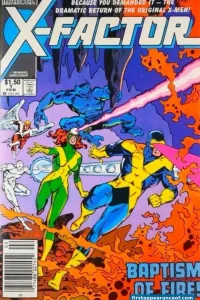
X-Factor #1 (February 1986) needed Jean Grey alive. Roger Stern and Bob Layton were launching a relaunch series featuring the original X-Men team (Cyclops, Beast, Iceman, Angel), and the team did not work without Jean. The mechanism Stern and Layton used was the retcon that the Phoenix Force was a separate cosmic entity that had bonded to Jean’s form during X-Men #101, with the actual Jean Grey preserved in a cocoon at the bottom of Jamaica Bay throughout the entire arc.
The retcon was structurally significant. It reframed the Phoenix Force as a distinct sentient cosmic being capable of bonding to multiple hosts across history. The framing solved the immediate problem (Jean is alive again) and created a new long-term storytelling engine (the Phoenix is now a recurring cosmic threat that can return whenever a writer wants it). Marvel has used the Phoenix as a recurring cosmic-threat element across multiple decades since, with the 2012 Avengers vs. X-Men event being the most consequential modern Phoenix storyline.
The retcon has been controversial. Some readers consider it the load-bearing example of how Marvel walks back consequential character deaths to bring popular characters back; others consider it a cosmically-elegant solution that retroactively made the Dark Phoenix Saga more interesting (Jean’s choices in the original arc were shaped by an external entity). Both readings have evidence. The retcon has held in canonical continuity since 1986.
The Phoenix Five and Hope Summers
Avengers vs. X-Men (2012) is the most consequential modern Phoenix storyline. Twelve-issue line-wide event with multiple writers and artists (Brian Michael Bendis, Jason Aaron, Ed Brubaker, Jonathan Hickman, Matt Fraction, John Romita Jr.). The plot framework: the Phoenix Force is returning to Earth and the Avengers and X-Men disagree on what to do about it. Cyclops believes the Phoenix will revitalize the depleted mutant population (post-House of M, mutants on Earth-616 had been reduced to a few hundred); the Avengers believe the Phoenix is a threat that must be contained.
The Phoenix arrives during the conflict and bonds with five X-Men (the Phoenix Five: Cyclops, Emma Frost, Magik, Colossus, Namor) rather than its intended host Hope Summers. The Phoenix Five become semi-corrupted by their fragments of Phoenix power and the conflict escalates. Cyclops, in the climax, kills Charles Xavier under Phoenix-corruption and is judged a major villain in the post-event Marvel Universe. The Phoenix passes to Hope Summers, who uses it to revitalize the mutant gene before discharging the Phoenix’s energy into a self-sustaining cycle.
The event is structurally one of the most consequential X-Men storylines of the 21st century. Cyclops’s status as a hero is permanently complicated. The mutant population’s depletion is reversed. The Phoenix Force returns to its cosmic-recurring-threat status, available for future writers to use.
Other Phoenix hosts
The list of canonical Phoenix hosts runs to over a dozen across decades:
- Jean Grey (1976 to 1980) — the original. Hosting through Dark Phoenix Saga.
- Rachel Summers (Earth-811) — Jean and Cyclops’s daughter from the Days of Future Past timeline. Hosts the Phoenix when she crosses to Earth-616 in Excalibur and X-Men.
- The Phoenix Five (Cyclops, Emma Frost, Magik, Colossus, Namor) — Avengers vs. X-Men.
- Hope Summers — Avengers vs. X-Men climax.
- Quentin Quire — Wolverine and the X-Men, Jason Aaron run.
- Various alternate-reality characters — Stephanie Brown, Wanda Maximoff, others across What If? and alternate-Earth storylines.
The Phoenix Force is structurally available for any writer who wants to use it. Marvel editorial has not constrained its appearances; the entity recurs whenever a writer needs cosmic-scale power and a corruption-vulnerable character.
Collector context
X-Men #101 is the canonical first-appearance key. CGC 9.4 trades in the high four to low five figures; 9.6 reaches into the five-figure range; 9.8 is rare and trades in the mid five to low six figures. The book is recognized as both the Phoenix first appearance and a foundational issue in the Claremont X-Men run.
X-Men #137 (Jean’s sacrifice) is the second-tier Phoenix-specific key and trades as a major Bronze Age X-Men issue. CGC 9.6 reaches into the four-figure range; 9.8 is rare and reaches mid four to low five figures. The cover (Jean and Cyclops, with the cosmic-tribunal background) is one of the most-recognized Bronze Age X-Men covers.
X-Factor #1 (1986, the Phoenix Force retcon) trades modestly. CGC 9.8 is in the high two to low three figures. The book’s collector profile is built primarily on the X-Factor team launch rather than on the Phoenix Force retcon specifically.