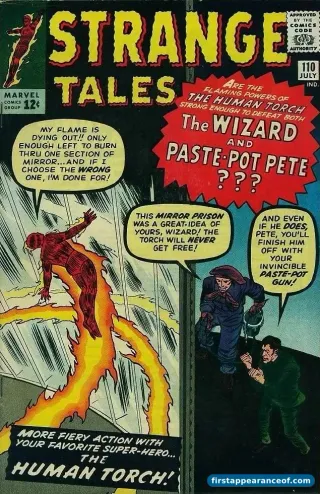
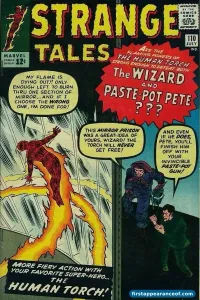
The cover of Strange Tales #110 (1963). Doctor Strange debuts inside as a back-up feature.

1st Appearance

First Appearance of Doctor Strange

Strange Tales #110

July 1963 · Marvel · Silver Age

The disgraced neurosurgeon who lost his hands and learned to bend reality with them. Steve Ditko's most personal Marvel creation.

Key Issue

Created by Stan Lee · Steve Ditko

By Atomm Updated

The first appearance (1st app) of Doctor Strange is Strange Tales #110 (July 1963), an eight-page back-up feature in the anthology title Strange Tales. Stan Lee scripted and Steve Ditko created the character, the visual language of the Mystic Arts, and the iconic costume. The debut is a back-up story and does not feature Doctor Strange on the cover. A partial cover-strip appearance lands in Strange Tales #118 (March 1964), and his first full cover feature is Strange Tales #130 (March 1965). Strange Tales was renamed Doctor Strange with issue #169 (June 1968) when Roy Thomas and Gene Colan took over from the Lee-Ditko team.

Quick Facts

Debut
Strange Tales #110 (July 1963)
Real name
Stephen Vincent Strange
Creators
Stan Lee (script), Steve Ditko (plot, art, character design, visual grammar of the Mystic Arts)
Publisher
Marvel Comics
First enemy
Nightmare, the demon ruler of the dream dimension
First ally
The Ancient One, the Sorcerer Supreme who trained Strange in Tibet
Team affiliations
Defenders (founding member), Illuminati, New Avengers

Firsts Timeline

  1. Strange Tales #110 cover
    First Appearance July 1963

    Strange Tales #110

    By Stan Lee, Steve Ditko

    Doctor Strange debuts as an eight-page back-up feature in the anthology title Strange Tales, alongside the lead Human Torch solo feature. Steve Ditko designs the character and visual language of the Mystic Arts. Stan Lee scripts. The debut issue does not feature Doctor Strange on the cover.

    Read the full breakdown
  2. First Full Cover Appearance March 1965

    Strange Tales #130

    By Stan Lee, Steve Ditko

    Doctor Strange's first full cover feature. A smaller partial cover-strip appearance landed earlier in Strange Tales #118 (March 1964), but #130 is the first issue where Doctor Strange shares proper cover billing with the Human Torch and the Thing. Cover pencils by Jack Kirby, inks by Chic Stone.

    Read the full breakdown
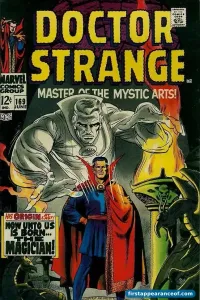
  3. Doctor Strange #169 cover
    First Self-Titled Series June 1968

    Doctor Strange #169

    By Roy Thomas, Gene Colan

    Strange Tales was renamed Doctor Strange with issue #169. Numbering continued from Strange Tales. Roy Thomas takes over writing and Gene Colan draws; the Lee-Ditko partnership on the character ended in 1966.

    Read the full breakdown

Creation Story

Doctor Strange was Steve Ditko’s creation in the most complete sense of the word. Ditko has said in multiple interviews that the concept, the character, the costume, the magical objects, and the entire visual grammar of the Mystic Arts were his, and that Stan Lee was not involved until the first issue’s dialogue. This is the rare Marvel Silver Age case where Ditko’s singular creative voice is not contested by parallel Lee claims.

The pitch was that a 1960s superhero comic could hold a magic-user. DC had Zatanna (introduced 1964) and had dabbled in the space earlier with Doctor Fate, but Marvel had not. Ditko’s interest in mysticism, Eastern philosophy, and surrealist visual imagery made Doctor Strange a different thing than what DC was producing. Where Zatanna is a magician, Doctor Strange is a reality-bending sorcerer operating in dimensions Ditko invented specifically for the book. The visual language of those dimensions (Escher-adjacent geometries, color fields shifting per panel, patterns that feel like Buddhist and Hindu iconography filtered through 1960s psychedelia) is the most-copied piece of Silver Age Marvel artwork.

Strange Tales #110 (July 1963) launched the character as an eight-page back-up feature in an anthology title that was still running monster-and-suspense stories in its lead slot. The origin is deferred: issue #110 is Doctor Strange already-formed, fighting Nightmare. His origin flashback does not arrive until Strange Tales #115 (December 1963), five issues later. Marvel was testing whether readers would respond to the character before committing to the origin story.

The response was strong. Within a year, Doctor Strange was the lead feature in Strange Tales (the Human Torch, previously the lead, had a separate solo in his own book by that point). Ditko wrote and drew the Strange Tales run until issue #146 (July 1966), when he left Marvel over separate creative and financial disputes primarily focused on Spider-Man. The Lee-Ditko Doctor Strange run ran for 37 issues and is the defining Silver Age arc for the character.

Strange Tales #169 (June 1968) renamed the book Doctor Strange. Roy Thomas took over writing, Gene Colan took over art. The Doctor Strange solo title has relaunched multiple times since then (1974, 1988, 2015) but the numbering continuity from Strange Tales establishes the Doctor Strange comic as a single continuous book from 1963 forward.

Collector context

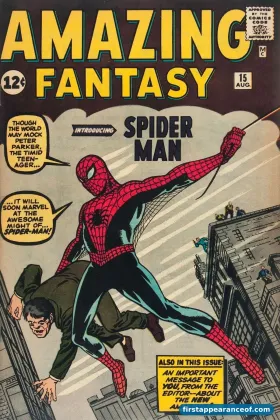
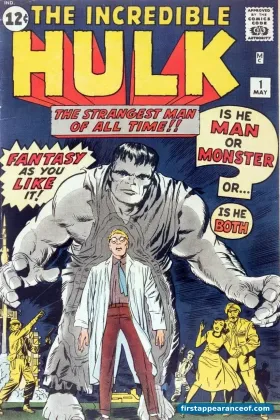
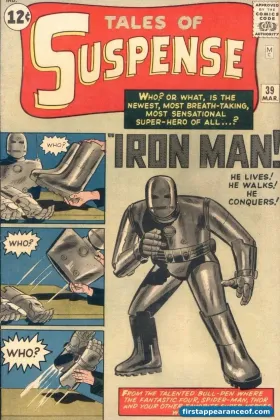
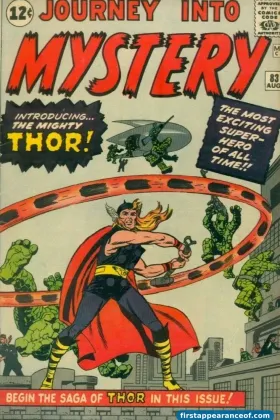
Strange Tales #110 is a second-tier Silver Age Marvel key. The primary keys of 1962 (Fantastic Four #1, Amazing Fantasy #15, Incredible Hulk #1) trade substantially higher; Strange Tales #110 trades below those and in the same tier as Tales of Suspense #39 (Iron Man’s first) and Journey into Mystery #83 (Thor’s first).

High-grade copies (CGC 9.0 and above) have crossed $50,000 at auction following the 2016 film. The Ditko-era Doctor Strange stories across Strange Tales #110 through #146 are a complete collector subtarget of their own; the Marvel Masterworks and Omnibus reprints collect the entire run in hardcover.

Strange Tales #115 (first origin flashback) and Strange Tales #126 (first Dormammu) are secondary keys within the Ditko run. Doctor Strange: The Oath #1 (2006) is the modern entry point most readers are pointed toward, and first-print copies of The Oath #1 carry a small premium for collectors who want the single-issue first print rather than the trade paperback.

Notable film effect: the 2016 Doctor Strange film visually references Ditko panel-for-panel in several sequences, and director Scott Derrickson has talked openly about using Ditko’s Strange Tales run as primary visual reference during pre-production. The Multiverse of Madness (2022) extends that visual language into horror territory under Sam Raimi’s direction, with additional visual cues pulled from the 1980s Doctor Strange runs by Roger Stern and Marshall Rogers.
Key subsequent appearances

After the debut, these are the issues collectors and historians reach for next.

  1. 1963

    Strange Tales #115

    Origin Flashback

    Doctor Strange's full origin flashback. Stephen Strange's car accident, the search for the Ancient One, the Tibet training sequence. The origin was deferred to the character's fifth appearance.

  2. 1964

    Strange Tales #126

    First Dormammu

    First appearance of Dormammu, the Dread Dormammu, Doctor Strange's recurring arch-nemesis. Ditko's dark dimension design is one of the most-reprinted visual sequences in Silver Age Marvel.

  3. 1971

    Marvel Feature #1

    Founding member of the Defenders. Doctor Strange teams with Hulk and Namor for the first Defenders story.

  4. 1968

    Doctor Strange #169

    Strange Tales renamed. Solo-title numbering continues from Strange Tales. First Thomas and Colan issue.

  5. 2006

    Doctor Strange: The Oath #1

    Brian K. Vaughan and Marcos Martin's five-issue modern revival. Widely recommended as the best modern entry point for new readers.

  6. 2015

    Doctor Strange #1 (2015)

    Aaron Era

    Jason Aaron and Chris Bachalo relaunch aligned with the 2016 film. Sets up the modern comics Doctor Strange through the 2020s.

In adaptations

Film, TV, animation, and game appearances.

  1. 1978

    Doctor Strange

    TV

    Starring:Peter Hooten

    CBS made-for-TV pilot film. Did not produce a series. First live-action appearance of the character.

  2. 2007

    Doctor Strange: The Sorcerer Supreme

    Animated

    Marvel Animation direct-to-video animated feature. The most comic-accurate adaptation before the 2016 film.

  3. 2016

    Doctor Strange

    Film

    Starring:Benedict Cumberbatch

    Scott Derrickson directs. Cumberbatch's MCU debut. Grossed $677M worldwide. Introduced the Mystic Arts visual language that Derrickson built from Ditko reference.

  4. 2022

    Doctor Strange in the Multiverse of Madness

    Film

    Starring:Benedict Cumberbatch

    Sam Raimi directs. Multiverse-scale horror-inflected sequel. Grossed $955M worldwide.

Frequently asked questions

The questions readers and collectors ask most.

What is Doctor Strange's first appearance?

Doctor Strange's first appearance is Strange Tales #110 (July 1963), an eight-page back-up feature in an anthology title. The character was created by Steve Ditko with scripting by Stan Lee. The debut does not feature Doctor Strange on the cover. A partial cover-strip appearance lands in Strange Tales #118 (March 1964); his first full cover feature is Strange Tales #130 (March 1965). His origin flashback arrives in Strange Tales #115 (December 1963).

Who created Doctor Strange?

Steve Ditko is the primary creator. Ditko designed the character, the costume, the Sanctum Sanctorum, the Eye of Agamotto, the Cloak of Levitation, and the entire visual grammar of the Mystic Arts. Stan Lee provided scripting and the conversational dialogue voice. Ditko has said in interviews that the Doctor Strange concept was entirely his and that Lee was not involved in the character's creation, only in the writing. Modern Marvel credits both as co-creators.

Is Strange Tales #110 a Silver Age key?

Yes, though in the second tier. Strange Tales #110 trades below Amazing Fantasy #15, Fantastic Four #1, Hulk #1, Journey into Mystery #83, and Tales of Suspense #39, but comfortably above most other 1962-1963 Marvel back-up debuts. High-grade copies (CGC 9.0 and above) have crossed $50,000 at auction. Prices spiked after the 2016 film and have held with Cumberbatch's continued MCU presence.

Why was Doctor Strange a back-up feature?

Strange Tales was a monster-and-supernatural anthology title in 1963. Marvel tested new characters in back-up slots before committing them to lead features or solo series. Doctor Strange was Marvel's second back-up experiment (the Human Torch had the lead solo feature in Strange Tales at the time). The character's sales performance earned him progressively more pages, then the cover, then eventually a rename of the title to Doctor Strange with issue #169 (June 1968).

Did Steve Ditko leave Marvel over Doctor Strange?

Not directly. Ditko left Marvel in 1966 over creative and financial disputes with Stan Lee, most visibly over the direction of The Amazing Spider-Man. Doctor Strange was Ditko's most personal Marvel work, and his departure ended the Lee-Ditko run on the character with Strange Tales #146 (July 1966). Ditko went on to create Question, Mr. A, and other independent work, but Marvel retained full rights to Doctor Strange.

What is the Oath and is it the best entry point?

Doctor Strange: The Oath (2006-2007) is a five-issue limited series by Brian K. Vaughan and Marcos Martin. It is the modern Doctor Strange book most widely recommended as a starting point for new readers. Self-contained, accessible, character-focused, and does not require knowledge of prior continuity. Available as a single trade paperback.