What Gotham City Is
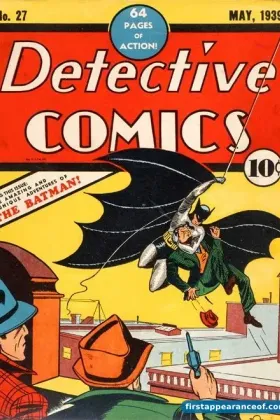
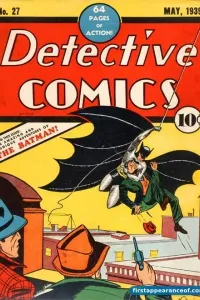
Batman worked his city for more than a year and a half without the Gotham name. Bill Finger and Bob Kane are credited with creating the city for DC in the Golden Age. It is there from his first story in Detective Comics #27, published March 30, 1939, and DC’s blog says he was apparently operating in New York until the name arrived.
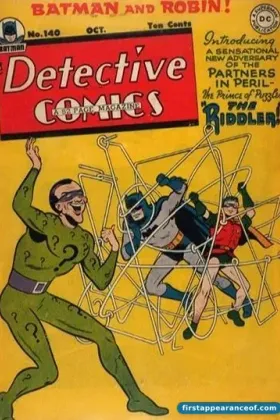
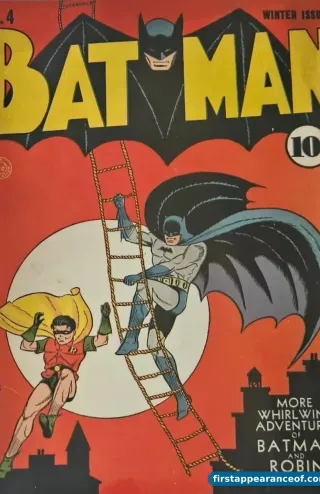
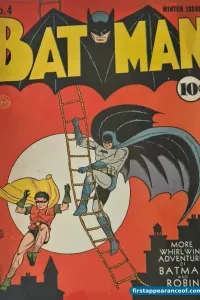
The name arrived twice in under three weeks. Detective Comics #48 (cover-dated February 1941) went on sale December 27, 1940, and the Grand Comics Database calls it one of the earliest references to Gotham City. Batman #4 (cover-dated Winter 1941) followed on January 15, 1941, with the name printed on a newspaper, the Gotham City Gazette, in “The Case of the Joker’s Crime Circus!” Wikipedia and DC credit Batman #4 with first naming Batman’s city. No source settles which issue printed it first.
Neither issue was the first comic to use the name. Fawcett’s Wow Comics #1 went on sale December 13, 1940, with Gotham City as the home of Mister Scarlet, and DC’s own blog hands Fawcett that distinction by a few weeks.
The look came from New York. Gotham’s streets draw mainly on New York, with Chicago and London mixed in over the years, and Dennis O’Neil pictured Gotham as Manhattan below 14th Street, just past midnight, in the dead of a cold November.
Where the Name Came From
Finger found the name in a phone book. He told Jim Steranko, in The Steranko History of Comics (1970), that he first meant to call the city Civic City, then tried Capital City and Coast City. Then he flipped through the New York City phone book, spotted a listing for Gotham Jewelers, and stopped looking. He kept the city from being New York on purpose, so readers in any town could identify with it.
The word had belonged to New York for more than 130 years. Washington Irving first attached it to the city in Salmagundi on November 11, 1807. He borrowed it from Gotham, a village in Nottinghamshire, and the legend of the Wise Men of Gotham, whose residents feigned idiocy to keep King John from making a royal visit. DC’s blog dates the village name to the 15th century and traces it to an Old English root meaning goat home.
Where Is Gotham City?
When DC names a state for Gotham, it is usually New Jersey, and that started in a fanzine. Amazing World of DC Comics was DC’s in-house fan magazine, sold by mail order, and issue #14, cover-dated March 1977, was its Justice League issue. Mark Gruenwald wrote the member write-ups, and in them he placed Gotham City in New Jersey and Metropolis in Delaware, with the bay between the two states keeping them apart. The placement lived in the text. The map came the next year.
A 1978 World’s Greatest Super-Heroes Sunday newspaper strip, written by Martin Pasko, drew it: Gotham City on the New Jersey side of Delaware Bay, Metropolis on the Delaware side, and a Metro Narrows Bridge between them. That strip panel is the Gotham-and-Metropolis map, which Wikipedia’s Gotham City article mislabels as art from Amazing World of DC Comics #14.
The comics picked it up from there. World’s Finest Comics #259 (October-November 1979) paired Gotham and Metropolis as twin cities, and Detective Comics #503 (June 1981) put Gotham in New Jersey, twenty miles south of the Jersey Shore by DC’s own account. In 1990 Mayfair Games published the Atlas of the DC Universe, a role-playing sourcebook written by Paul Kupperberg, which kept Gotham in New Jersey and Metropolis in Delaware on the strip’s precedent. Kupperberg has said the book was never meant as the official word, yet it became a go-to guide for many DC writers and editors as well as gamers. The twin-city pairing shows up often, not always.
Not every Gotham sits in New Jersey. Joker: Folie à Deux (2024) puts Gotham in New York State, down to its court case and license plates, and Todd Phillips said New Jersey was discussed among the filmmakers. The animated Young Justice shows Gotham in southern Connecticut, around where Bridgeport stands.
In 2026 the fanzine got a sitcom citation. Stuart Fails to Save the Universe, a Warner Bros. Television production for HBO Max made with Chuck Lorre Productions, sends its cast into a DC comic set in Gotham City in Season 1, Episode 9, “Spoiler: We Couldn’t Get Green Lantern” (HBO Max, September 17, 2026). Stuart has just placed the Flash in Central City when this exchange runs:
Bert: “Gotham City isn’t New York?”
Denise: “No, and guess what? Metropolis is in Delaware.”
Bert: “No way.”
Stuart: “Way. Amazing World of DC Comics #14. They’re twin cities.”
Stuart has the right issue for the states: #14 put Gotham in New Jersey and Metropolis in Delaware. The twin cities facing each other across the bay are the 1978 strip’s picture.
Inside Gotham
Gotham is best known as home ground to Batman and his allies and foes, and some of its landmarks have debuts of their own. Arkham Asylum makes its first appearance in Batman #258 (October 1974), by Dennis O’Neil and Irv Novick. Batman works out of the Batcave, his secret headquarters.
The city also got a series with its name on the cover. Gotham Central, created by Greg Rucka, Ed Brubaker and Michael Lark, ran from December 2002 to April 2006.
Gotham on Screen
Tim Burton’s Batman (US release June 23, 1989) built its Gotham on a backlot at Pinewood Studios. Anton Furst designed it as New York gone wrong: he described imagining what New York might have become without a planning commission, a city run by crime with a riot of architectural styles. Furst and set decorator Peter Young won the Academy Award for Best Art Direction for the film.
Batman: The Animated Series premiered on Fox Kids in September 1992. Bruce Timm designed Batman and Eric Radomski designed the sets, with every background painted in light colors on black paper. The producers called the result Dark Deco: film noir with Art Deco touches inspired by 1940s-era New York, and partly by Burton’s film.
Christopher Nolan’s Batman Begins (US release June 15, 2005) shot exteriors in London, New York and Chicago, and Nolan has said Chicago inspired his Gotham.