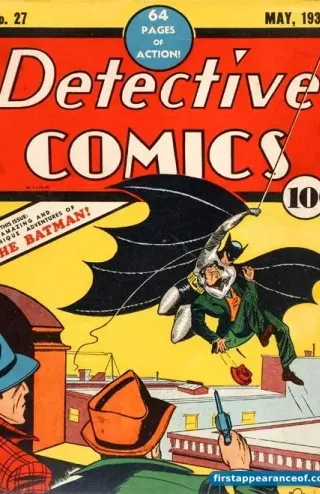
Detective Comics #27 (1939). Commissioner Gordon debuts in the same issue as Batman, the foundational Golden Age key.

1st Appearance

First Appearance of Commissioner Gordon

Detective Comics #27

May 1939 · DC · Golden Age

Gotham's compromised but principled police commissioner. The institutional partner Batman shouldn't have, the moral counterweight to vigilante operation, and the longest-running supporting character in DC publishing.

Key Issue

Created by Bill Finger · Bob Kane

By Atomm Updated

The first appearance (1st app) of Commissioner James Gordon is Detective Comics #27 (May 1939), the same issue that introduces Batman. Bill Finger writes; Bob Kane pencils. Gordon debuts as the police commissioner whose office Bruce Wayne visits at the beginning of the 'Case of the Chemical Syndicate' story. The framework establishes Gordon as the institutional-authority counterweight to Batman's vigilante operation. Frank Miller and David Mazzucchelli's Year One arc (Batman #404 to #407, 1987) gave Gordon his definitive modern characterization and is widely regarded as the canonical Gordon origin story.

Quick Facts

Debut
Detective Comics #27 (May 1939)
Real name
James Worthington Gordon
Creators
Bill Finger (writer), Bob Kane (artist)
Publisher
DC Comics
First enemy
The institutional corruption of the Gotham City Police Department
First ally
Batman / Bruce Wayne (his unlikely partner across eight decades of Bat-stories)
Team affiliations
Gotham City Police Department (commissioner)

Firsts Timeline

  1. Detective Comics #27 cover
    First Appearance May 1939

    Detective Comics #27

    By Bill Finger, Bob Kane

    Bill Finger writes; Bob Kane pencils. Gordon debuts in the same issue as Batman, in the 'Case of the Chemical Syndicate' story. Gordon is the police commissioner whose office Bruce Wayne visits at the beginning of the story; the framework establishes Gordon as the institutional-authority counterweight to Batman's vigilante operation. The same issue is one of the most valuable Golden Age comics ever published.

    Read the full breakdown
  2. Year One — Modern Reframing February 1987

    Batman #404

    By Frank Miller, David Mazzucchelli

    Frank Miller writes; David Mazzucchelli pencils. The Year One arc (Batman #404 to #407) gave Gordon his definitive modern characterization: a recently-transferred police lieutenant arriving in a corrupt Gotham, navigating the GCPD's compromises while reluctantly cooperating with Batman. The Miller-Mazzucchelli Year One is widely regarded as the definitive Gordon origin story.

    Read the full breakdown

Creation Story

Commissioner James Gordon debuts in Detective Comics #27 (May 1939), the same issue as Batman. Bill Finger writes; Bob Kane pencils. The “Case of the Chemical Syndicate” story opens with Bruce Wayne visiting Commissioner Gordon’s office; Gordon is established as a long-standing family friend of the Waynes (a framework that has been preserved across subsequent decades). Within the story, Gordon represents the institutional-authority counterweight to the as-yet-unknown Batman; by the story’s end, the framework that defines the Batman-Gordon relationship for eighty subsequent years is in place.

The character’s structural role has stabilized into the framework most readers know: Gotham City’s police commissioner, Batman’s reluctant institutional partner, the moral counterweight to vigilante operation, and the dad-figure whose principled compromises with the GCPD’s broader corruption define his character work.

Year One

Frank Miller and David Mazzucchelli’s four-issue Year One arc (Batman #404 to #407, February to May 1987) is the definitive modern Gordon characterization. The arc retells both Batman’s first year as a vigilante and Commissioner Gordon’s first year on the GCPD in parallel, with the two narratives interweaving across alternating chapters. Gordon arrives in Gotham as a recently-transferred lieutenant; navigates the GCPD’s institutional corruption (his initial superior officer is being paid by the Falcone crime family); makes a series of compromised but principled choices that culminate in his eventual ascension to commissioner.

The Year One Gordon characterization has been preserved across virtually every subsequent Gordon portrayal: in comics continuity, in animated adaptations, in the Christopher Nolan film trilogy (Gary Oldman’s Gordon is essentially Year One Gordon adapted directly to film), in the Gotham television series (which dramatized Year One across multiple seasons), and in The Batman (2022).

The Killing Joke

Alan Moore and Brian Bolland’s Batman: The Killing Joke (March 1988) is one of the most controversial extended Gordon storylines. The Joker shoots and paralyzes Barbara Gordon (James Gordon’s daughter, Batgirl) and subjects Gordon to extended psychological torture over the course of the one-shot. The arc was controversial at the time of publication and has remained one of the most-debated Bat-stories ever published.

Barbara Gordon’s paralysis held in canon for over two decades; she transitioned to the Oracle identity (an information-broker role) until DC Rebirth (2016) restored her physical capability and Batgirl identity. The Killing Joke remains required reading for Gordon-focused collectors and continues to be cited in conversations about how mainstream comics handle violence against female characters.

The screen tradition

Gary Oldman’s Gordon in Christopher Nolan’s Dark Knight trilogy (2005 to 2012) is widely regarded as the definitive screen portrayal. Oldman’s performance directly adapts the Year One framework. Ben McKenzie’s Gordon in Gotham (Fox, 2014 to 2019) starred as the show’s central protagonist across five seasons; the show dramatized Gordon’s Year One trajectory across an extended television timeline. Jeffrey Wright’s Gordon in The Batman (2022, Matt Reeves) emphasizes the working-detective relationship with Robert Pattinson’s young Batman.

Collector context

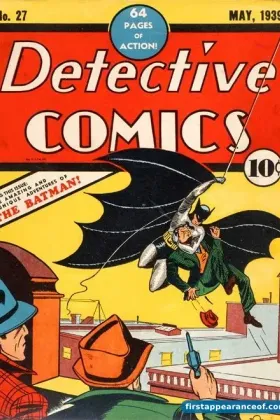
Detective Comics #27 is the Commissioner Gordon Golden Age first-appearance key, shared with Batman and Bruce Wayne. The book is one of the most valuable comics ever published; high-grade CGC 8.0+ copies have crossed $1,000,000 at auction.

Secondary keys: Batman #404 (1987, Year One Part 1, Gordon’s modern origin). Batman: The Killing Joke (1988, Barbara Gordon paralysis, extended Gordon torture arc). The Year One four-issue set (#404 to #407) is the standard collector framework for modern Gordon material.
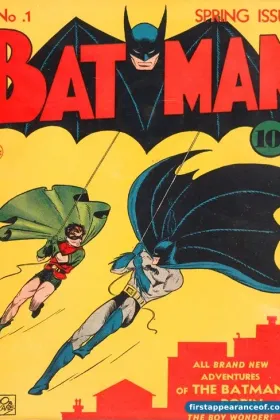
Key subsequent appearances

After the debut, these are the issues collectors and historians reach for next.

  1. 1939

    Detective Comics #27

    First appearance (same issue as Batman).

  2. 1942

    Detective Comics #66

    First Two-Face

    Bill Finger and Bob Kane. Two-Face's first appearance involves Gordon as a key supporting character. Establishes the Gordon-vs-organized-crime framework that defines his mature character work.

  3. 1987

    Batman #404

    Year One. Frank Miller and David Mazzucchelli's definitive modern Gordon origin.

  4. 1988

    Batman: The Killing Joke

    Killing Joke

    Alan Moore writes; Brian Bolland pencils. The Joker shoots and paralyzes Gordon's daughter Barbara (Batgirl) and tortures Gordon. The arc is one of the most controversial extended Gordon storylines and reframed his canonical character framework for subsequent decades.

In adaptations

Film, TV, animation, and game appearances.

  1. 1966

    Batman

    TV

    Starring:Neil Hamilton

    ABC television series. Hamilton's Gordon is the foundational live-action portrayal. Three seasons.

  2. 2005

    Batman Begins

    Film

    Starring:Gary Oldman

    Christopher Nolan directs. Oldman plays Gordon across the Dark Knight trilogy. Widely regarded as the definitive screen Gordon.

  3. 2014

    Gotham

    TV

    Starring:Ben McKenzie

    Fox series. McKenzie plays a young Gordon as the show's central protagonist across five seasons (2014 to 2019).

  4. 2022

    The Batman

    Film

    Starring:Jeffrey Wright

    Matt Reeves directs. Wright's Gordon emphasizes the working-detective relationship with Robert Pattinson's young Batman.

Frequently asked questions

The questions readers and collectors ask most.

What is Commissioner Gordon's first appearance?

Commissioner Gordon's first appearance is Detective Comics #27 (May 1939), the same issue that introduces Batman. Bill Finger writes; Bob Kane pencils. Gordon debuts as the police commissioner whose office Bruce Wayne visits at the beginning of the 'Case of the Chemical Syndicate' story. The book is one of the most valuable Golden Age comics ever published.

Is Detective Comics #27 valuable?

Yes, extraordinarily. Detective Comics #27 is one of the foundational documents of the superhero genre and one of the most valuable comics ever published. High-grade copies (CGC 8.0 and above) have crossed $1,000,000 at auction. The book is structurally a multi-character first-appearance key (Batman, Commissioner Gordon, Bruce Wayne) plus a foundational genre milestone.

What is Batman: Year One?

Frank Miller and David Mazzucchelli's four-issue arc (Batman #404 to #407, February to May 1987) that retold both Batman's first year as a vigilante and Commissioner Gordon's first year on the GCPD in parallel. The arc is widely regarded as the definitive modern origin for both characters and is one of the most-cited Bat-stories ever published. Gordon's Year One characterization (a recently-transferred lieutenant arriving in a corrupt Gotham, navigating the GCPD's compromises) became canonical and has been preserved across virtually every subsequent adaptation.

Why did the Joker shoot Barbara Gordon?

Alan Moore and Brian Bolland's Batman: The Killing Joke (March 1988) had the Joker shoot and paralyze Barbara (Gordon's daughter, Batgirl) as part of an extended psychological-torture arc against Commissioner Gordon. The arc was controversial at the time and has remained one of the most-debated extended Gordon storylines. Barbara Gordon transitioned to the Oracle identity in subsequent continuity (until DC Rebirth restored her physical capability and Batgirl identity). The Killing Joke remains required reading for Gordon-focused collectors.

Are Barbara and James Gordon related in canon?

Yes. Modern canonical continuity has Barbara Gordon as James Gordon's daughter. The relationship has been canon since the Silver Age but has been retconned multiple times (Barbara was framed as Gordon's niece in some older continuities). The modern post-Crisis and post-Rebirth continuities consistently treat Barbara as Gordon's biological or adoptive daughter.