Creation Story
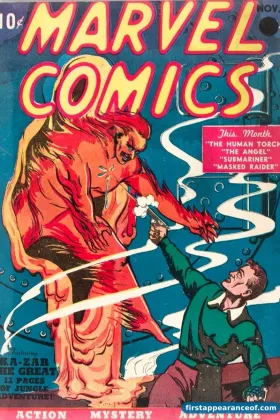
Stan Lee was a Timely Comics kid in the 1940s. He worked at the company. He read the books. The Human Torch was one of the three banner characters in the Timely lineup along with Captain America and the Sub-Mariner. By 1961, when Lee and Kirby started Fantastic Four, the Timely-era Human Torch (Jim Hammond, an android by Carl Burgos) had been out of publication for a decade. Lee picked the Torch name back up for the youngest member of the new team partly out of personal affection for the original and partly because the Marvel-era practice of reusing Golden Age names was already established.
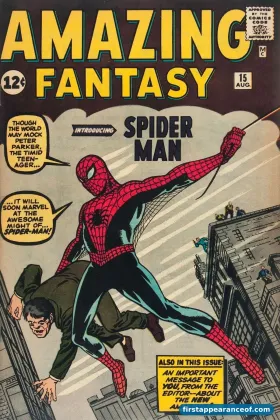
Johnny in 1961 is a Lee-Kirby teenager. He is younger than the others; he is brash; he is the only one whose age means he gets sent home from missions sometimes. The Lee-Kirby kid-brother framing predates Spider-Man by ten months. When Lee built Peter Parker as a teenage hero in Amazing Fantasy #15 (August 1962), the path had partly been cleared by Johnny Storm in FF #1 the previous November. Marvel’s teenage-hero model is Johnny first, Peter second, and the rest of the line followed.
The Strange Tales solo feature from #101 to #134 is the underrated component of Johnny’s history. The strip ran for over three years with rotating Lee-Kirby-Ditko-Ayers credits, and it is where Johnny gets meaningful page-time outside the team dynamic. After Strange Tales #134 the character became almost exclusively a team-book lead. He has had occasional solo miniseries since but no sustained ongoing.
Romantically, Crystal of the Inhumans is Johnny’s first long-term partner from FF #45 onward, intermittent through the 1970s. The relationship has been on and off for sixty years. Crystal eventually marries Quicksilver, which is its own complication. Johnny has had multiple shorter relationships since, none with the durability of the Crystal arc. The character’s family-life framing has stayed lighter than Reed-and-Sue, which is by design; the FF needs both registers.
The death-and-return arc in Hickman’s run (FF #587 in 2011, return within a year) is the most consequential modern Johnny moment. Hickman wrote the death as a meaningful exit; the return was reversed by editorial schedule. The two-issue gap between death and return is short by Marvel-character standards, but it remains the strongest Johnny-focused arc since the Strange Tales solo feature ended.
Chris Evans’s casting in 2005 made Johnny the rare Marvel character whose live-action and comic-book portrayals were equally well-regarded. Evans then recast as Captain America in 2011 because the FF rights were at Fox; the casting reuse was unusual but worked, partly because Johnny and Cap are tonally opposite enough that audience confusion was minimal. Joseph Quinn in 2025 is the third actor in the role and the first MCU iteration. The 2015 Mara-Trank-Jordan version is mostly remembered for the rest of the film around it.
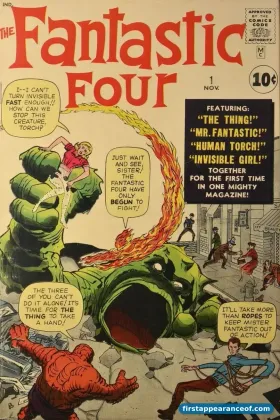
First Appearance and First Cover: Fantastic Four #1
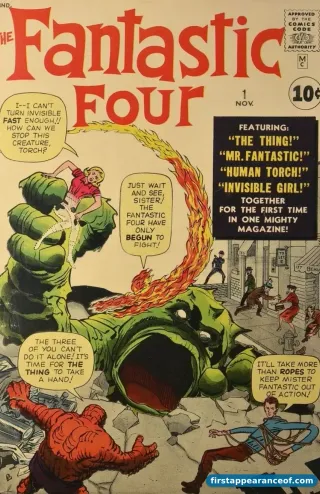
Johnny is on the cover of FF #1, on fire. Kirby drew him as the blonde teenager mid-flame, smaller in the composition than Reed and Ben because his body language reads as kid-brother throughout the cover. Lee’s name banner at the top of the cover identifies him as “The Human Torch,” which is the deliberate Timely callback Lee was reaching for.
The story inside introduces him at his sister’s lab. Reed signals the team. Johnny ignites for the first time. The transformation sequence is one of the more memorable single pages in early Marvel: a teenage kid catches fire, panics, recovers, takes off into the air. Kirby’s flame work in this issue is unusually loose for him; the linework around the flames is dense and improvisational rather than the tight Kirby style of the rest of the book. The page reads as a creator deliberately drawing something different from the standard rocky-monster he had been doing in the previous monster-comic phase of his Marvel work.
The Strange Tales solo feature picks up in October 1962, eleven months after FF #1. Strange Tales #101 has Kirby covers and Lee scripts and is the first Johnny solo book. There is no character revision in the Strange Tales feature; it is an extension of the FF #1 framing into shorter narratives. The strip is a curiosity for collectors more than a major key, but it has held its market position over time as a Silver Age Lee-Kirby foundational book.
For pricing, FF #1 is the canonical first appearance. CGC 9.0+ copies trade in the seven figures. Strange Tales #101 in CGC 9.4 trades in the four-to-low-five figures depending on grade and recent comp activity. The two issues together are the foundational Johnny Storm collection; everything after is the team-book run, which is priced as FF book runs rather than as Johnny-specific keys.