What the mansion is
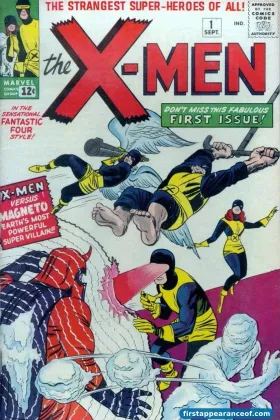
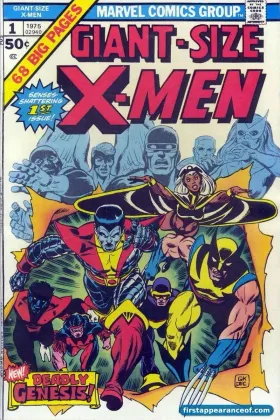
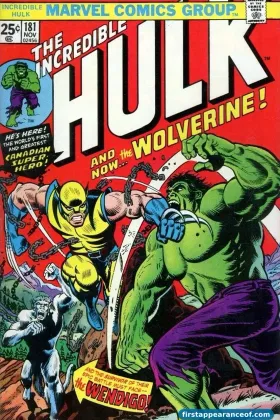
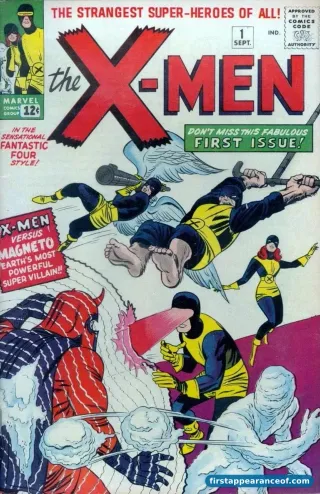
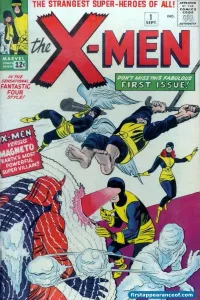
Stan Lee and Jack Kirby created Xavier’s Mansion in The X-Men #1 (September 1963) as the team’s headquarters in Westchester, New York. The framing combines a private school cover for the mutant-training operation with deeper-basement infrastructure for serious combat readiness. Cerebro, the mutant-detection computer, lives in the basement. The Danger Room, the team’s combat-training facility, is on a different sublevel. The X-jet hangar is below that. Above ground, the mansion functions as a working private school for gifted youngsters, with classrooms, dorms, dining hall, library, all the conventions of a New England prep school.
The dual-function framing has been the structural premise of the X-Men property for sixty years. The mansion is a school first, an Avengers-style headquarters second, and a recurring battleground third. Most X-Men stories begin or end at the mansion. The recurring destruction cycle (the place gets blown up, the team rebuilds, the school reopens) is one of the most-cited X-Men story beats and is treated as background continuity rather than a plot crisis at this point.
The recurring destruction cycle
The mansion has been destroyed at least eight times across decades. The major destructions:
- Uncanny X-Men #281 (1991) — The Sentinels destroy the mansion during the X-Men’s confrontation with the Hellions. First major mansion destruction.
- Operation: Zero Tolerance (1997) — Anti-mutant Operation: Zero Tolerance attacks render the mansion uninhabitable.
- New X-Men #115 (2001) — Cassandra Nova’s mega-Sentinel destroys the mansion. The Grant Morrison run rebuilt it as the Xavier Institute for Higher Learning.
- House of M (2005) — Reality-warping event resets the mansion temporarily.
- Messiah Complex (2008) — Mansion damaged.
- Schism (2011) — Cyclops and Wolverine split the team; the mansion’s role splits with them.
- Krakoa era (2019 onwards) — The mansion’s functions partially shift to the mutant-nation island. The Westchester mansion has continued to appear intermittently across Krakoa-era stories.
The destruction-and-rebuild cycle is an X-Men property cliche by this point. Readers expect any X-Men ongoing to feature the mansion in some state of damage or recent rebuild. Writers use the cycle as a recurring storytelling beat that signals story-stakes without requiring permanent consequence.
Cerebro and the Danger Room
Two sub-systems within the mansion have become more famous than most non-mansion locations in Marvel:
Cerebro — Charles Xavier’s mutant-detection device, located in the mansion basement. First appears as “Cyber-no” in X-Men #7 (October 1964) and gets the canonical name across the next few issues. The device tracks mutants globally by amplifying Xavier’s telepathy. Cerebro has been redesigned multiple times across artists and eras; the canonical visual is the helmet-and-mainframe room that the X-Men films popularized.
The Danger Room — Combat-training facility introduced in X-Men #2 (November 1963). Originally mechanical (rotating walls, swinging blades, projectile launchers); upgraded to holographic Shi’ar technology under Chris Claremont’s run starting in 1975. The hologram-based Danger Room has been the canonical version since the 1980s. Successive arcs have explored the Danger Room becoming sentient (Danger as a character in Joss Whedon’s Astonishing X-Men run, 2004 to 2008).
Live-action mansion
The 2000 Bryan Singer X-Men film established the live-action mansion using Casa Loma, a Toronto castle, as the exterior shooting location. The interior was constructed on sets but matched the Casa Loma exterior architecture. Subsequent Fox X-Men films (X2, X-Men: The Last Stand, X-Men: Days of Future Past, X-Men: Apocalypse, Logan) used variations of the same register, with X2 particularly iconic for the mansion-attack sequence.
The MCU has not yet introduced the X-Men in its main continuity. Whatever mansion design Marvel Studios eventually chooses will be one of the most-anticipated production-design decisions of the late MCU, given the cultural weight the Casa Loma version has accumulated over twenty-five years.
Collector context
X-Men #1 is the canonical first-appearance key for the mansion and is a top-tier Silver Age key. CGC 9.0 and above trades in the mid five to low six figures. The book’s market position has stayed strong across decades because of the team-debut framing; mansion’s debut value is folded into the broader X-Men #1 value with no separable market premium.
X-Men #2 (Danger Room first appearance) trades modestly relative to #1. CGC 9.4 and above is in the high four to low five figures. Specialist collectors track the issue; broader markets do not differentiate it from the run.