Creation Story
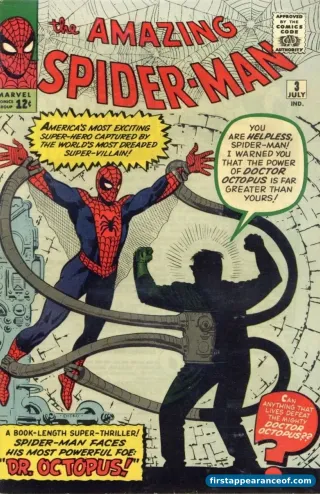
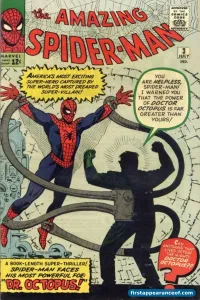
Doctor Octopus was Stan Lee and Steve Ditko’s third major Spider-Man antagonist, arriving just three issues into the ongoing Spider-Man series. Amazing Spider-Man #3 (July 1963) introduces Otto Octavius with a full origin flashback: a nuclear physicist whose mechanical-arm laboratory harness is fused to his spine in a radiation accident. Ditko’s arm design (four prehensile tentacles with pincer ends) is one of the most distinctive visual identities in all of superhero comics.
Lee and Ditko’s decision to give Doc Ock a defining defeat of Spider-Man in the debut was deliberate. Spider-Man had been winning his battles through Amazing Spider-Man #1 and #2. Amazing Spider-Man #3 has Spider-Man losing his first major fight, retreating, and having to recover before facing Octopus again. The structural move set up Doc Ock as Spider-Man’s first genuine physical equal and reshaped reader expectations about the book’s narrative stakes.
Amazing Spider-Man Annual #1 (October 1964) has Doc Ock founding the Sinister Six, the first Spider-Man supervillain team-up: Doctor Octopus, Vulture, Electro, Kraven the Hunter, Mysterio, and Sandman. The Sinister Six structure (single hero versus villain team) became a Marvel template that expanded to other books across the following decades.
Amazing Spider-Man #32 to #33 (1966), often collected as “If This Be My Destiny,” is the Lee and Ditko Doc Ock arc that produced the most-reproduced Spider-Man image in comics: Spider-Man trapped under collapsed machinery, pushing the weight off his back to rescue Aunt May. The sequence is the visual shorthand for Spider-Man’s endurance and willpower and has been reprinted, homaged, and referenced in every major Spider-Man film.
The Superior Spider-Man era
Dan Slott’s Amazing Spider-Man #700 (December 2012) did something Marvel had not allowed before: Otto Octavius transferred his consciousness into Peter Parker’s dying body, killing Peter. Slott then wrote Superior Spider-Man (January 2013 to April 2014) with Otto operating as Spider-Man, believing he could be a “superior” version of Peter while building a corporate empire, graduating with Peter’s PhD, and dating Peter’s girlfriend. The 30-issue run was one of the most controversial Spider-Man storylines in decades and one of the most critically successful.
Peter returned to his own body in Superior Spider-Man #31. The Superior Spider-Man arc is widely regarded as Slott’s strongest long-form Spider-Man work and has been revisited multiple times since. Otto retains his memories of being Spider-Man in current continuity, which makes subsequent appearances layered with the psychological residue of the experience.
Collector context
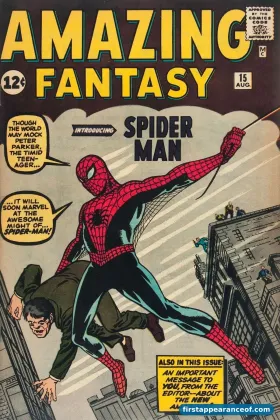
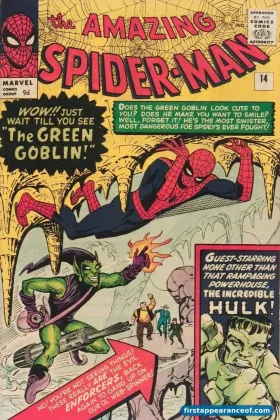
Amazing Spider-Man #3 is a required Silver Age Spider-Man key, alongside Amazing Fantasy #15 (first appearance), Amazing Spider-Man #1 (first solo title), and Amazing Spider-Man #14 (first Green Goblin). High-grade copies have crossed $100,000 at auction.
Secondary keys: Amazing Spider-Man Annual #1 (1964) is the first Sinister Six and a major Spider-Man villain key in its own right. Amazing Spider-Man #700 (2012) is the Superior Spider-Man setup. Superior Spider-Man #1 (2013) is the start of the body-swap run.