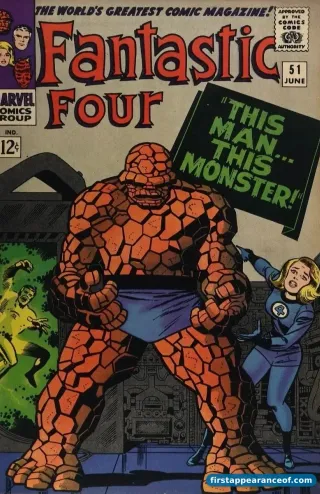
Fantastic Four #51 (1966). Lee and Kirby. The first reference to the antimatter subspace; the named 'Negative Zone' designation comes in subsequent issues.

1st Reference (as 'Subspace')

First Appearance of Negative Zone

Fantastic Four #51

June 1966 · Marvel · Silver Age

Stan Lee and Jack Kirby's 1967 antimatter dimension. The Negative Zone is a parallel universe accessed by Reed Richards's portal, populated by Annihilus, Blastaar, and various cosmic threats. One of Marvel's foundational alternate-dimension settings.

Key Issue

Created by Stan Lee · Jack Kirby

By Atomm Updated

Marvel Comics Place The antimatter universe accessed by the Fantastic Four.

The Negative Zone first appears as 'subspace' in Fantastic Four #51 (June 1966), Stan Lee and Jack Kirby, and gets the canonical 'Negative Zone' name in Fantastic Four #62 (May 1967). The antimatter parallel dimension is accessed by Reed Richards's portal technology and is populated by Annihilus, Blastaar, and various cosmic threats. The 2006 Annihilation event is the most-cited modern Negative Zone storyline.

Firsts Timeline

  1. Fantastic Four #51 cover
    First Reference (as 'Subspace') June 1966

    Fantastic Four #51

    By Stan Lee, Jack Kirby

    The 'subspace' framing in This Man, This Monster precedes the named Negative Zone. Reed Richards uses the dimensional-portal technology that becomes the Negative Zone access mechanism.

  2. First Named Negative Zone May 1967

    Fantastic Four #62

    By Stan Lee, Jack Kirby

    Lee and Kirby. The Negative Zone is named explicitly. Same issue introduces Blastaar, the Negative Zone's first major antagonist.

  3. Annihilus Debut November 1968

    Fantastic Four Annual #6

    By Stan Lee, Jack Kirby

    Annihilus, the Negative Zone's signature antagonist, debuts. Annihilus has remained the canonical Negative Zone villain across decades; the 2006 Annihilation event is the most-cited modern Negative Zone storyline.

What the Negative Zone is

Stan Lee and Jack Kirby introduced the Negative Zone in Fantastic Four #51 (June 1966) as ‘subspace,’ an antimatter parallel dimension. The named ‘Negative Zone’ designation came in FF #62 (May 1967), with Blastaar as the Zone’s first major antagonist. Annihilus debuted in FF Annual #6 (November 1968) and has remained the canonical Negative Zone villain across decades.

The Zone is structurally a recurring cosmic-threat origin in the Marvel Universe. The 2006 Annihilation event by Keith Giffen and others extensively explored the Zone’s geopolitics; Annihilus’s invasion of the standard Marvel universe was the foundational cosmic Marvel event of the 2000s. Subsequent Marvel cosmic stories have continued to use the Zone as a recurring antagonist origin.

Collector context

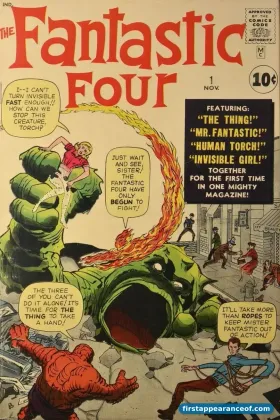
Fantastic Four #51 trades in the four-figure range at CGC 9.4 and above. The book is a recognized Lee-Kirby FF run key with multiple collector framings (subspace debut, Ben Grimm character work). FF #62 (named Negative Zone, first Blastaar) and FF Annual #6 (first Annihilus) are the second-tier collector keys.
Frequently asked questions

The questions readers and collectors ask most.

What is the Negative Zone's first appearance?

Fantastic Four #51 (June 1966) for the 'subspace' first reference; Fantastic Four #62 (May 1967) for the canonical 'Negative Zone' name. Different framings privilege different issues.

Who lives in the Negative Zone?

Annihilus is the signature antagonist. Blastaar is a secondary recurring villain. The Tyrant Star, various cosmic threats, and the Annihilation Wave forces have appeared across decades. The 2006 Annihilation event by Keith Giffen extensively explored the Zone's geopolitics.

Is FF #51 valuable?

Yes. CGC 9.4 trades in the four-figure range. The 'This Man, This Monster' issue is one of the most-cited single Lee-Kirby FF issues, valued for the Ben Grimm character work in addition to the subspace debut.