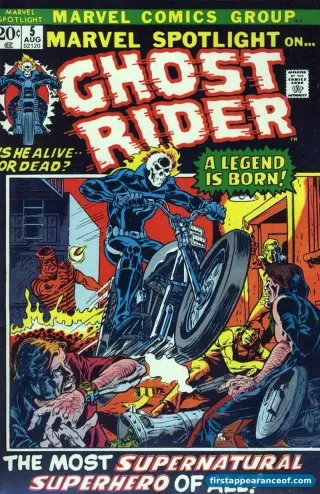
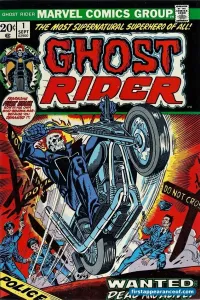
Johnny Blaze transforming into Ghost Rider on the cover of Marvel Spotlight #5 (1972).

1st Appearance and 1st Cover

First Appearance of Ghost Rider

Marvel Spotlight #5

August 1972 · Marvel · Bronze Age

A motorcycle stunt rider who sold his soul for someone else's life and got the wrong devil.

Key Issue

Created by Gary Friedrich · Roy Thomas · Mike Ploog

By Atomm Updated

The first appearance (1st app) of Ghost Rider is Marvel Spotlight #5 (August 1972), created by Gary Friedrich with art by Mike Ploog and editorial plot contribution from Roy Thomas. The issue establishes Johnny Blaze, a stunt motorcycle rider who signs a demonic contract with Mephisto to save his cancer-stricken mentor Crash Simpson. The contract binds Blaze to the demon Zarathos, who transforms him into the flaming-skull Ghost Rider. Ghost Rider received his first self-titled ongoing series thirteen months later with Ghost Rider #1 (September 1973).

Quick Facts

Debut
Marvel Spotlight #5 (August 1972)
Real name
Johnny Blaze
Creators
Gary Friedrich (concept and script), Roy Thomas (editorial plot assist), Mike Ploog (art and character design)
Publisher
Marvel Comics
First enemy
Mephisto, the demon who binds Blaze to Zarathos
First ally
Crash Simpson, Blaze's mentor and surrogate father
Team affiliations
Champions (classic lineup), Midnight Sons, Secret Defenders

Firsts Timeline

  1. Marvel Spotlight #5 cover
    First Appearance First Cover August 1972

    Marvel Spotlight #5

    By Gary Friedrich, Roy Thomas, Mike Ploog

    Gary Friedrich concept and script; Roy Thomas editorial plot assist; Mike Ploog interior art and cover. Introduces Johnny Blaze, the stunt rider who makes a deal with Mephisto to save his mentor and ends up possessed by the demon Zarathos.

    Read the full breakdown
  2. Ghost Rider #1 cover
    First Solo Title September 1973

    Ghost Rider #1

    By Gary Friedrich, Tom Sutton

    Ghost Rider's first solo ongoing series, launched thirteen months after the Marvel Spotlight debut. Friedrich returns as writer; Tom Sutton on art for the first issue.

    Read the full breakdown

Creation Story

Ghost Rider arrived at Marvel as a Bronze Age horror experiment. The early 1970s saw Marvel loosening the Comics Code grip on supernatural content, and editor Roy Thomas was actively building a horror-adjacent lineup: Tomb of Dracula, Werewolf by Night, Man-Thing, and Ghost Rider as parallel launches. Gary Friedrich pitched the core concept: a motorcycle stunt rider who makes a demonic bargain and pays the wrong price.

Mike Ploog drew the debut issue. Ploog’s background was in horror comics at Warren Publishing (Creepy, Eerie), and his visual grammar on Marvel Spotlight #5 pulled directly from that. The flaming skull design, the leather jacket, the chain-wrapped motorcycle, the color-palette: all Ploog. The character’s visual identity has not meaningfully changed in fifty years.

Marvel Spotlight #5 (August 1972) establishes the full origin in a single issue. Johnny Blaze is a young stunt rider working in his mentor Crash Simpson’s traveling show. Simpson is dying of cancer. Blaze finds an occult book and uses it to summon Mephisto, offering his soul in exchange for Simpson’s life. Mephisto saves Simpson (from cancer; Simpson later dies in a stunt), and the deal obligates Blaze to serve as a vessel for the demon Zarathos. When Blaze is near darkness or evil, he transforms into the Ghost Rider, the flaming-skulled Spirit of Vengeance, bound to the demon but retaining his own consciousness.

The solo ongoing launched in September 1973 with Ghost Rider #1 by Friedrich and Tom Sutton. The book ran 81 issues through 1983 and established the character’s place in the Marvel Bronze Age horror corner alongside Werewolf by Night, Dracula, and the Midnight Sons lineup.

The Danny Ketch era

The 1990s brought a second Ghost Rider. Howard Mackie and Javier Saltares launched Ghost Rider Vol. 2 #1 in May 1990 with Danny Ketch as the new Spirit of Vengeance. The book was a commercial monster: the 1990 Ghost Rider run was one of Marvel’s best-selling titles of the early 1990s speculator boom, and issue #1 had multiple printings. First-print copies in high grade remain widely available; the book’s commercial footprint was large enough that CGC 9.8 census counts are substantial.

Johnny Blaze returned as the primary Ghost Rider in subsequent relaunches (2001, 2006, 2011, 2017, 2022), but the Ketch era is the version many 1990s readers encountered first.

Collector context

Marvel Spotlight #5 is the canonical Bronze Age Ghost Rider key and the single issue any serious Ghost Rider collector targets first. High-grade copies have crossed $20,000 at auction. Low-grade copies trade in the $500 to $1,500 range. The book’s collector value is stable through decades of film adaptations of varying success; the comics key held through both Nicolas Cage films and has picked up on the Gabriel Luna MCU-adjacent performance.

Secondary keys worth knowing: Ghost Rider #1 (1973) is the first solo title and a Bronze Age target in its own right. Ghost Rider Vol. 2 #1 (1990) is the 1990s speculator-era key and is accessible in high grade. All-New Ghost Rider #1 (2014) is the Robbie Reyes first appearance and a modern-era key that picked up with Gabriel Luna’s casting.
Key subsequent appearances

After the debut, these are the issues collectors and historians reach for next.

  1. 1972

    Marvel Spotlight #5

    Defining Bronze Age horror-adjacent Marvel key.

  2. 1973

    Ghost Rider #1

    First solo title.

  3. 1990

    Ghost Rider #1 (Vol. 2)

    Danny Ketch Era

    Howard Mackie and Javier Saltares launch a second Ghost Rider. Danny Ketch becomes the new Spirit of Vengeance. The 1990s ongoing runs 93 issues and was one of the best-selling Marvel books of the early 1990s.

    Newsstand variant
  4. 2001

    Ghost Rider #1 (Vol. 3)

    Devin Grayson and Trent Kaniuka limited series. Johnny Blaze returns as the primary Ghost Rider.

  5. 2022

    Ghost Rider #1 (2022)

    Benjamin Percy and Cory Smith launch the latest ongoing alongside renewed interest from the MCU.

In adaptations

Film, TV, animation, and game appearances.

  1. 2007

    Ghost Rider

    Film

    Starring:Nicolas Cage

    Mark Steven Johnson directs. Grossed $228M worldwide on a $110M budget. Widely panned but set up a sequel.

  2. 2012

    Ghost Rider: Spirit of Vengeance

    Film

    Starring:Nicolas Cage

    Mark Neveldine and Brian Taylor direct. Sequel underperformed critically and commercially.

  3. 2016

    Agents of S.H.I.E.L.D.

    TV

    Starring:Gabriel Luna

    Luna plays Robbie Reyes, the newer Ghost Rider, across season 4. Strong critical reception for the performance.

Frequently asked questions

The questions readers and collectors ask most.

What is Ghost Rider's first appearance?

Ghost Rider's first appearance is Marvel Spotlight #5 (August 1972), written by Gary Friedrich with art by Mike Ploog. Roy Thomas provided editorial plot contribution. The issue introduces Johnny Blaze, the original Ghost Rider, in a full origin story.

Is Marvel Spotlight #5 valuable?

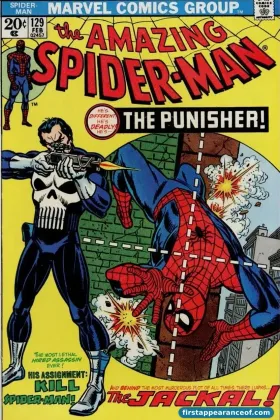
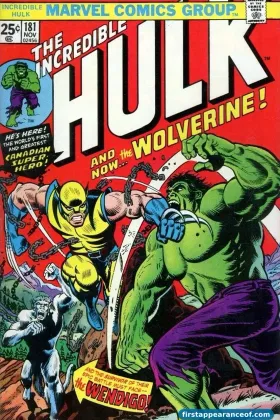
Yes. Marvel Spotlight #5 is a Bronze Age key alongside Hulk #181 and Amazing Spider-Man #129. High-grade copies (CGC 9.0 and above) have crossed $20,000 at auction. Prices moved with the 2007 Nicolas Cage film and have held through the Gabriel Luna MCU-adjacent performance.

Is there more than one Ghost Rider?

Yes. Johnny Blaze is the original (Marvel Spotlight #5, 1972). Danny Ketch is the 1990s version (Ghost Rider Vol. 2 #1, 1990). Robbie Reyes is the modern version (All-New Ghost Rider #1, 2014) and the one Gabriel Luna plays on Agents of S.H.I.E.L.D. All three are canonical Spirits of Vengeance and have appeared together across multiple Marvel crossover events.

Who is Mike Ploog and why does he matter to Ghost Rider?

Mike Ploog was a Marvel artist who came up through Warren Publishing (Creepy, Eerie) and brought a horror-comic visual sensibility to Marvel's Bronze Age supernatural lineup. Ploog drew the Marvel Spotlight #5 debut and the first several issues of the solo ongoing. His flaming-skull Ghost Rider design is the visual template every subsequent artist works from.

Why did Gary Friedrich sue Marvel?

Friedrich pursued creator credit and residuals from Marvel following the 2007 film adaptation. The case moved through courts for years and resulted in a 2013 settlement. Modern Marvel crediting recognizes Friedrich as co-creator alongside Ploog and Thomas. Friedrich's contribution to the character concept has been documented thoroughly in fan press interviews.