What Krypton is
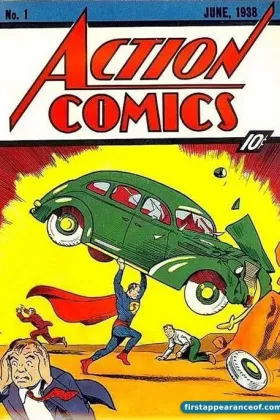
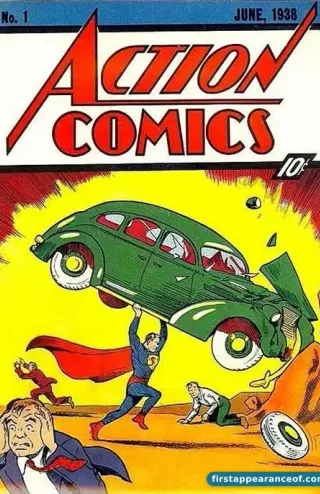
Jerry Siegel and Joe Shuster created Krypton in Action Comics #1 (June 1938) as the origin point for Superman. The planet appears in the first two pages of the issue, depicted as an Earth-like world destroyed by internal geological stress. Kal-El’s father (unnamed in this debut, later named Jor-El) launches the infant Kal-El to Earth as the planet collapses. The framing is brief, almost perfunctory; Krypton in 1938 is mostly just a reason for Superman to be on Earth, not a fully-developed setting.
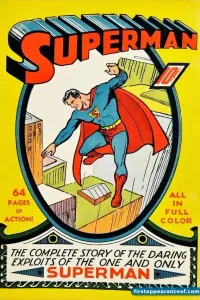
The planet is not named in the debut. The name ‘Krypton’ canonizes in Superman #1 (Summer 1939), the first Superman solo title. The naming establishes the long-running terminology: Superman is from Krypton, Kal-El is his Kryptonian birth name, Jor-El is his father. The visual establishment of Krypton remains modest in the early Golden Age; the deep worldbuilding of Kryptonian civilization comes from later writers, particularly under Mort Weisinger’s editorial direction at DC in the late 1940s through 1971.
The Mort Weisinger Krypton
Most of what readers think of as canonical Krypton lore was built under Mort Weisinger’s editorial direction. Weisinger edited Superman from approximately 1941 to 1971 and oversaw the development of the planet’s culture, geography, and physics framework. The pieces that emerged during this period:
- The red sun (Rao) and yellow sun (Sol) physics framework. Kryptonians evolved on a planet around a red sun and develop superpowers when exposed to yellow-sun radiation on Earth. The framework explains why Superman has powers and most other characters do not, and it has remained canonical across nearly every Superman continuity since.
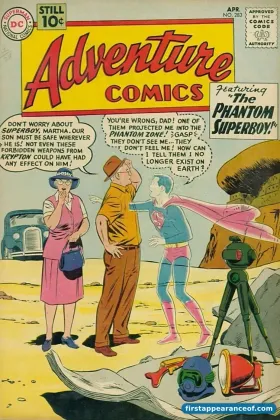
- The Phantom Zone. A pocket dimension used as a Kryptonian penal colony for major criminals (General Zod, Faora, others). First appears in Adventure Comics #283 (April 1961) under Weisinger’s editorial supervision.
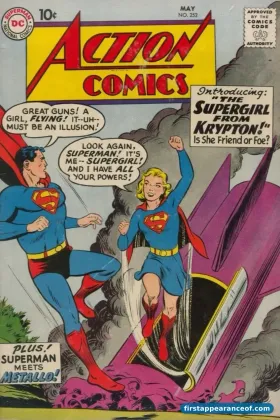
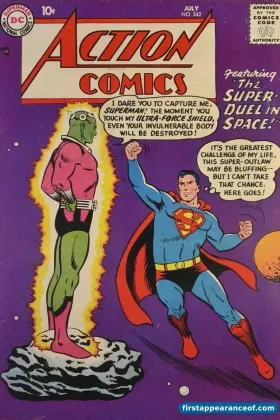
- The Bottle City of Kandor. Krypton’s capital city, shrunken and stolen by Brainiac before the planet’s destruction; preserved in a bottle in Superman’s Fortress of Solitude. First appears in Action Comics #242 (July 1958).
- Krypto the Superdog. Kal-El’s pet from Krypton, sent to Earth as a test before the Kal-El launch. First appears in Adventure Comics #210 (March 1955).
- Kryptonian technology, government, and culture. The Council, the science guilds, the social structure that the planet operated under before its destruction.
The Weisinger Krypton was warm in tone. The planet was depicted as a slightly-more-advanced Earth, with families, art, science, and recognizable human emotional structures. Most of the lore from this period is recognizable to modern readers because it has been preserved in adaptations even when the underlying comic continuity has been reset.
The Byrne reset
John Byrne’s 1986 Man of Steel limited series rebuilt Krypton as part of the broader post-Crisis on Infinite Earths reset of DC’s continuity. Byrne reframed Krypton as a cold, sterile, emotionally-repressed civilization. The planet’s culture was hyper-rationalist; physical contact between Kryptonians was rare; emotional expression was muted; reproduction was managed through gestation chambers rather than human-style biological reproduction. Krypton in Byrne’s framing was a place that was deliberately not a warm second-Earth.
The reset rejected most of the Mort Weisinger-era Krypton lore. The Phantom Zone framing was kept, but Krypto the Superdog was removed from continuity, the Bottle City of Kandor was removed, and most of the Weisinger-era social structure was rebuilt from scratch. Successive post-Crisis Superman writers (Roger Stern, Dan Jurgens, Karl Kesel, Jeph Loeb) leaned on the Byrne framework through the 1990s.
The post-Crisis Krypton framework was partially walked back through Infinite Crisis (2005 to 2006), the New Krypton storyline (2008 to 2010, Geoff Johns and others), and the post-Flashpoint reset. The current canonical Krypton in mainline DC publishing is a hybrid of Byrne-era sterility and Weisinger-era warmth, depending on the writer.
Adaptations
Krypton has appeared in nearly every major Superman adaptation across film, television, animation, and video games. The most-influential treatments:
- Superman: The Movie (1978). Marlon Brando’s Jor-El. The crystalline Krypton with white-and-cool-blue tones became one of the most-influential single visual treatments of the planet. Subsequent adaptations have drawn heavily from the 1978 Krypton design.
- Smallville (2001 to 2011). Krypton appears extensively in flashback and through Kryptonian artifacts on Earth. The series’s Krypton was closer to the Weisinger-era warm framing than the Byrne-era cold framing.
- Man of Steel (2013). Zack Snyder’s Krypton with Russell Crowe’s Jor-El, depicted as a dying world with extensive worldbuilding around the Codex, the Genesis Chamber, and Kryptonian biology. The 2013 film leans heavily on the Byrne-era framework.
- Krypton (2018 to 2019). Two-season Syfy series set generations before Superman’s birth. The most-developed Krypton material in any medium, although it sits outside the DC live-action film universe and the comic continuity.
Collector context
Action Comics #1 (June 1938) is the canonical first-appearance reference for both Superman and Krypton. The book is one of the highest-value comic books ever published; high-grade copies have crossed $5 million at auction. The Krypton first-appearance value is folded into the Superman first-appearance value; there is no separable Krypton-specific market premium on Action Comics #1.
Superman #1 (Summer 1939) is the first canonical-named Krypton. CGC 9.0 and above is rare and trades in the high five to mid six figures. The book is recognized as a Krypton-specific key by specialist collectors but does not command the broader market position of Action Comics #1.
Adventure Comics #283 (Phantom Zone first appearance, April 1961) and Action Comics #242 (Brainiac and Kandor first appearance, July 1958) are the most-tracked Silver Age Krypton-lore keys. Both trade in the four-to-five-figure range at CGC 9.0 and above. The Weisinger-era expansion of Kryptonian lore is reflected in the collector market through these recurring sub-keys.