What vibranium is
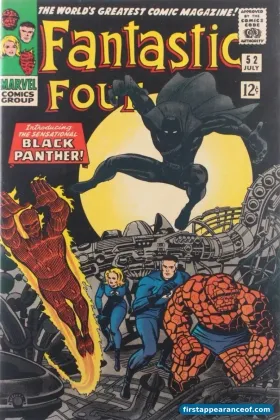
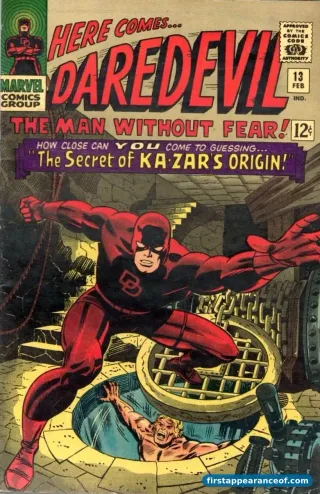
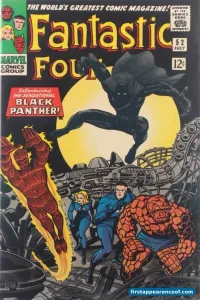
Stan Lee and John Romita Sr. introduced vibranium in Daredevil #13 (February 1966) as a named kinetic-energy-absorbing metal. The framing in 1966 was minimal; vibranium was a McGuffin substance that Daredevil tracked across the issue. The deeper worldbuilding came five months later in Fantastic Four #52 (July 1966), where Stan Lee and Jack Kirby established Wakanda as the source of vibranium and tied the substance to the broader Marvel Universe.
The Wakandan-vibranium framework has been canonical since 1966. Wakanda sits on a meteorite impact site that deposited vibranium thousands of years before the present-day stories; the metal is the basis of the nation’s wealth, technological lead, and isolationism. Most vibranium in Marvel continuity is Wakandan in origin, with the Antarctic variety (introduced in Astonishing Tales #6, June 1971) as a separate sub-category that behaves differently.
The Antarctic Vibranium / ‘anti-metal’ framework was a Gerry Conway and Larry Lieber addition. The Antarctic variety destroys other metals on contact through vibrational frequency disruption rather than absorbing kinetic energy. The two-vibranium framework has remained in Marvel continuity since 1971 but Wakandan vibranium is what most stories use; Antarctic vibranium appears occasionally as a specialty plot device.
Captain America’s shield
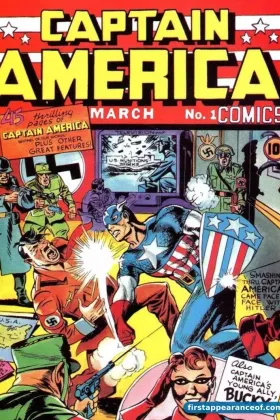
Tales of Suspense #66 (June 1965, eight months before Daredevil #13’s vibranium introduction) established that Captain America’s shield is made of a unique vibranium-steel alloy created accidentally by metallurgist Dr. Myron MacLain. The retcon tied the shield’s defensive properties to vibranium’s kinetic-energy-absorption mechanic and gave the artifact a coherent in-universe explanation for why it could absorb impacts that would destroy any other material.
The interesting wrinkle: Tales of Suspense #66 mentioned the alloy without using the word ‘vibranium’ (the substance hadn’t been introduced yet in Daredevil #13). The retroactive linking of the alloy to vibranium emerged across the late 1960s as Marvel’s continuity tightened. The alloy recipe has never been replicated; MacLain has tried for decades and failed. The shield is therefore functionally unique in the Marvel Universe even though vibranium itself is a known substance.
The MCU framework
The 2018 Black Panther film (Ryan Coogler, Hannah Beachler) extensively depicted vibranium as Wakanda’s economic and technological foundation. The film’s treatment built vibranium into a multi-purpose substance: kinetic absorption, energy storage, healing applications (the heart-shaped herb’s effects on Black Panther are partially vibranium-derived in the film), structural material, and advanced electronics. The detailed treatment was one of the most-influential single depictions of the substance in any medium.
The MCU’s Tesseract is unrelated to vibranium; the Tesseract is the housing for the Space Stone in the Infinity Stones framework. Some recent Marvel comic-book stories have used vibranium more flexibly under MCU influence; older comic-book stories treat vibranium as a more constrained substance with specific properties.
Other vibranium variants
Marvel has introduced multiple vibranium variants beyond the Wakandan and Antarctic versions:
- Reverbium — a synthetic vibranium variant with frequency-altering properties
- Black Vibranium — a darker variant with specific cosmic-energy applications
- Kymellian Vibranium — an alien-origin variant with different molecular structure
Most of these are minor specialty additions; the Wakandan and Antarctic varieties are the load-bearing canonical framework.
Collector context
Daredevil #13 (February 1966) is the canonical vibranium first-appearance key. CGC 9.4 trades in the four-figure range; 9.6 reaches into the high four-figure range; 9.8 is rare and reaches the mid four to low five figures. The MCU’s Black Panther film significantly increased the book’s market position; prices have remained strong since 2018.
Fantastic Four #52 (July 1966, the Wakandan-vibranium establishment) trades at the FF #52 price tier (high four to low five figures at CGC 9.0 and above). The book is recognized for both the Black Panther / Wakanda first appearance and the Wakandan-vibranium framework establishment; collectors do not separate the two market premiums.
Tales of Suspense #66 (June 1965, the Captain America shield vibranium-steel alloy) trades modestly. CGC 9.4 and above is in the high three to low four figures. The book is a recognized Cap key but does not command vibranium-specific premium beyond the broader Cap Silver Age run pricing.