What the Phantom Zone is
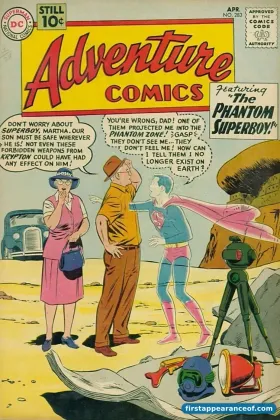
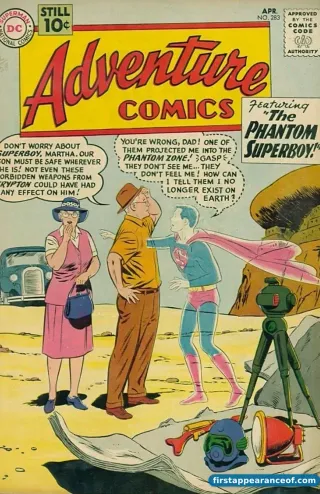
The Phantom Zone is the prison Krypton built for the criminals it would not kill. It first appears in Adventure Comics #283, cover-dated April 1961, in a Superboy story written by Robert Bernstein and drawn by George Papp under a Curt Swan cover. A cache of Kryptonian gear falls to Earth, Superboy trips the projector hidden among it, and he lands in a silent grey plane where Krypton’s worst are serving out bodiless sentences. The same issue introduces General Zod, which makes #283 the debut of both the prison and its most famous inmate.
The idea was a humane upgrade. In the story, Krypton had abolished the death penalty and taken to exiling its convicts into space in rockets; the Zone, a pocket dimension Jor-El had discovered, replaced that with an exile that didn’t double as a slow death sentence. The detail has stuck across sixty years. Every later writer keeps the Phantom Zone as Krypton’s answer to a death penalty the planet wouldn’t impose, which is why it reads less like a dungeon than like a civilization’s conscience with the lights left on.
How it works
Sentencing to the Phantom Zone strips a prisoner of physical form. Inside, they don’t age, don’t eat, don’t sleep, and can’t touch anything, including each other. They drift as bodiless phantoms, which is where the name comes from, and they can watch the living universe carry on without them. That watching is most of the punishment. Time barely registers, so a sentence of centuries costs the prisoner nothing but the waiting.
The way in and out is the Phantom Zone projector, the Kryptonian device that opens the plane from the outside. It is the load-bearing piece of the whole concept: nearly every escape in Superman history traces back to the projector being found, stolen, or broken. Later writers bolted on crystals and other gateways, but the projector is the original key and the one the stories keep returning to.
Who’s inside
General Zod is the reason most readers know the Zone exists at all. He arrives in the same 1961 issue and becomes its recurring export, the Kryptonian general who keeps getting out and keeps coming back. Around him the comics built a standing rogues’ gallery of Zone prisoners: Jax-Ur, Faora, Quex-Ul, and other survivors of a dead planet, all of them waiting on the wrong side of the projector. The films later added their own Zone inmates, Ursa and Non, who were folded back into the comics afterward. For a franchise whose hero is the last of his kind, the Zone is a useful loophole. It is where Krypton’s other survivors go when a story needs them, and where they wait between escapes.
On screen
The Zone is one of the few pieces of Superman lore the films took whole. Superman (1978) opens with Jor-El sentencing Zod, Ursa, and Non to it, the spinning pane of glass swallowing them into the dark. Superman II (1981) pays that off: a hydrogen bomb Superman hurls into space shatters the Zone and frees the three, and the sequel’s entire plot is the bill coming due. Man of Steel (2013) reworked the mechanism, giving Zod’s army a 300-year sentence and then having Krypton’s own destruction break the projector and let them out, but it kept the core idea intact. The screen versions are why “the Phantom Zone” reads to a general audience as shorthand for Kryptonian prison.
Why it endures
Most Silver Age plot devices age into trivia. The Phantom Zone didn’t, because it solved a structural problem that never goes away: how to give an invulnerable hero enemies who can match him without killing them off for good. The Zone is a renewable supply of Kryptonian villains and a reset button in one, and it carries no continuity baggage. A prisoner can sit in it for thirty real-world years and walk out unchanged.
Adventure Comics #283 is the collector key, and it carries two firsts at once: the first Phantom Zone and the first General Zod. That pairing makes it one of the more sought-after Silver Age Superman-family books, and high-grade copies command prices to match. It is a debut that mattered more than its modest Superboy-story packaging ever suggested.