What Mjolnir is
Stan Lee borrowed the name Mjolnir from Norse mythology in 1962, where it had been the name of Thor’s hammer for approximately a thousand years before any superhero comic existed. The Norse Mjolnir is described in the surviving Eddic poems and prose as a hammer that always returns when thrown, that is unbreakable, and that is small enough to be hidden in a tunic. Marvel’s 1962 version preserved the always-returns trait, made the hammer enchantment-based rather than dwarven-forged (the comic later went back to the dwarven origin in Walt Simonson’s run), and added the worthiness mechanic that became the defining Marvel signature.
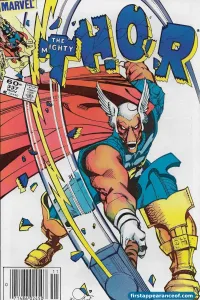
The worthiness inscription is the load-bearing rule. The text on the hammer reads “Whosoever holds this hammer, if he be worthy, shall possess the power of Thor.” The mechanic is character-driven rather than mechanical: any being judged worthy by the enchantment can lift Mjolnir; any being not judged worthy cannot, regardless of physical strength. The Hulk cannot lift it. The Juggernaut cannot lift it. Captain America can, briefly, in select issues. Beta Ray Bill, an alien horse-faced cybernetic warrior, can. The mechanic gives Marvel writers a flexible test that can promote or demote characters based on the story’s needs without changing any physical property of the hammer.
Why the worthiness mechanic works
The choice that made Mjolnir interesting beyond its physical capabilities was building moral authority into the weapon. Most superhero artifacts are tools: Captain America’s shield deflects, Iron Man’s armor protects, Spider-Man’s web-shooters shoot. Mjolnir judges. The hammer is the only major superhero artifact that has an editorial opinion about whether the person holding it deserves to be holding it.
The mechanic creates dramatic stakes that other artifacts cannot. When Thor becomes unworthy (most prominently in Original Sin in 2014, when Nick Fury whispers something into Thor’s ear that breaks his ability to wield the hammer), the loss of Mjolnir is a character event rather than a mechanical event. When Captain America lifts the hammer (Avengers #44 in 1967, Avengers: Endgame in 2019), the moment is a confirmation of his moral status rather than a feat of strength. When Jane Foster picks up Mjolnir in 2014 and becomes Thor, the act is an editorial promotion rather than a power-up.
The worthiness mechanic is also why the hammer keeps mattering across eight decades of publication. Most superhero artifacts get less interesting over time as readers acclimate to their capabilities. Mjolnir gets more interesting because every new bearer, every new unworthiness moment, and every new character interaction with the hammer adds another data point about how the worthiness test works. The mechanic is a recurring engine for stories rather than a fixed prop.
Major Mjolnir milestones
A short timeline of the most consequential moments in the hammer’s publishing history:
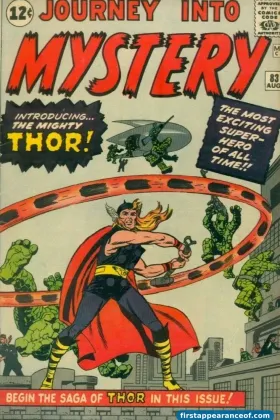
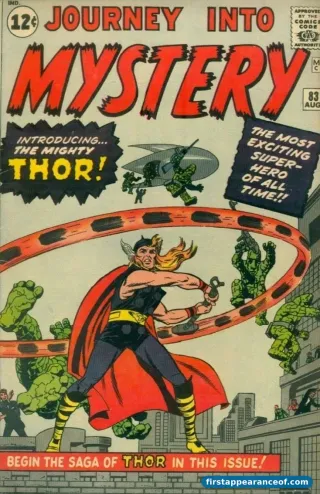
- Journey into Mystery #83 (1962): First appearance. Donald Blake’s transformation. The walking-stick mechanic.
- Thor #337 (1983): Beta Ray Bill lifts Mjolnir. Walt Simonson’s run begins. The first non-human, non-Odinson bearer.
- Thor #339 (1983): Stormbreaker created for Beta Ray Bill so both worthy beings can keep their hammers.
- Avengers #44 (1967): Captain America briefly lifts Mjolnir. The first hint that the worthiness test can promote a non-Asgardian.
- Thor #1 Vol. 4 (2014): Jane Foster becomes Thor. Jason Aaron’s run.
- Original Sin (2014): Thor becomes unworthy. The hammer is left on the Moon. The unworthy-Thor arc runs for several years.
- Avengers: Endgame (2019, MCU): Captain America lifts Mjolnir on screen. The moment is a direct adaptation of multiple decades of comic-book worthiness moments and is widely considered one of the strongest single beats in the MCU’s Phase 3.
Collector context
Journey into Mystery #83 is the canonical first-appearance key. The book is a top-tier Silver Age comic; CGC 9.0 and above is in the seven figures. The Mjolnir first-appearance value is folded into the Thor first-appearance value; there is no separable Mjolnir-specific market premium.
Thor #337 (Beta Ray Bill, the first major Mjolnir milestone after the original) trades in the four-to-low-five figure range at CGC 9.8. The Walt Simonson cover is one of the most-recognized Bronze Age Thor covers and the issue’s market position has been strong for decades.
Thor #1 Vol. 4 (Jane Foster) trades modestly. Print runs were substantial for a 2014 launch and supply remains plentiful. CGC 9.8 is in the low three figures. The issue’s collector profile has not yet matured to the level of Thor #337, partly because the print run is so much larger and partly because the Jane Foster run, while critically successful, has not yet had the same time to accumulate market weight.