What the Cosmic Cube is
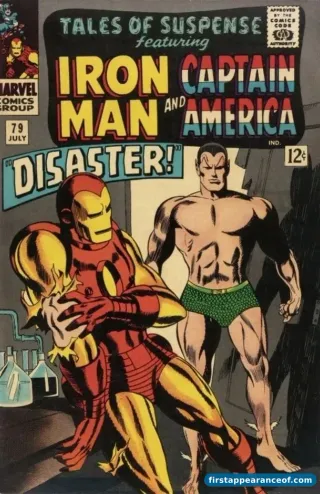
Stan Lee and Jack Kirby created the Cosmic Cube in Tales of Suspense #79 (July 1966) as an AIM (Advanced Idea Mechanics) creation. AIM was an established Marvel science-criminal organization at the time; introducing them as the creators of a reality-warping artifact gave the Cube an in-universe origin that connected to existing Marvel mythology.
The Cube’s mechanic is reality manipulation. The wielder can reshape any aspect of reality within the Cube’s effective range, limited only by the wielder’s imagination, resolve, and willpower. Most wielders are described as functionally omnipotent within range, with the limitations being psychological rather than physical. The Cube has been used to rewrite history, raise the dead, transmute matter, control populations of cities or planets, and effectively any reality-scale alteration the writer wants to depict.
The Red Skull’s pursuit of the Cube is one of the most-cited recurring Cap-villain dynamics. The Skull steals the Cube in Tales of Suspense #80 (August 1966) and uses it against Cap; this confrontation establishes the framework that has run across decades. Most major Captain America villain arcs since 1966 have featured the Skull or another antagonist pursuing some form of the Cube as a cosmic-scale weapon.
Multiple Cubes
Captain America #115 (July 1969) established that more than one Cosmic Cube exists. Marvel had used the Cube as a single unique item through 1966 to 1968; the multi-Cube framework expanded the concept into a recurring cosmic-artifact category. Subsequent writers have introduced new Cubes periodically across decades. Notable Cubes:
- The original AIM Cube (Tales of Suspense #79, 1966)
- The Beyonder Cube — Secret Wars II (1985-1986), the Beyonder’s relationship to the Cosmic Cube concept and the broader cosmic structure of the Marvel Universe was extensively explored
- Thanos’s Cube — Infinity Gauntlet-related arcs (1990-1991), Thanos uses a Cube briefly during the broader Infinity-event cycle
- Various subsequent recreations across Captain America, Avengers, and broader Marvel runs
The multi-Cube framework gives writers a recurring cosmic-artifact mechanism that can appear in any era without contradicting prior continuity. The Cube as a singular unique item would have constrained storytelling; the Cube as a category allows flexibility.
The Tesseract and the MCU
The MCU adapted the Cosmic Cube as the Tesseract, introduced in Captain America: The First Avenger (2011) and central to Marvel Studios’ Phase 1 and Phase 2 continuity. The Tesseract is the housing for the Space Stone, one of the six Infinity Stones in the MCU framework. The screen designation differs from the comic continuity; in the comics, the Cosmic Cube is unrelated to the Infinity Stones, and the Tesseract name was a screen choice not a comic-book retcon.
The Tesseract’s appearances across the MCU:
- Captain America: The First Avenger (2011) — Red Skull discovers the Tesseract and uses it to power Hydra weapons during World War II.
- The Avengers (2012) — Loki uses the Tesseract to open a portal for the Chitauri invasion of Earth. Recovered at the climax.
- Thor: The Dark World (2013) and Avengers: Age of Ultron (2015) — Tesseract held in Asgard’s vault.
- Thor: Ragnarok (2017) — Loki steals the Tesseract during Asgard’s destruction.
- Avengers: Infinity War (2018) — Thanos retrieves the Tesseract and crushes it to extract the Space Stone, then embeds the Stone in the Infinity Gauntlet.
- Avengers: Endgame (2019) — Tesseract retrieved during the time-heist sequences.
The Tesseract name has overtaken the Cosmic Cube name in mainstream cultural prominence since the MCU launched. Most casual viewers know the artifact as the Tesseract; comic readers know it as the Cosmic Cube; both refer to the same conceptual thing across continuities.
Collector context
Tales of Suspense #79 is the canonical Cosmic Cube first-appearance key. CGC 9.4 trades in the high three to low four figures; 9.6 reaches into the four-figure range; 9.8 is rare and reaches the mid four to low five figures. The MCU’s Tesseract introduction in 2011 significantly increased the book’s market position; prices have remained strong since.
Tales of Suspense #80 (Red Skull and the Cube) is the second-tier Cosmic Cube key. The book trades in the four-figure range at CGC 9.4 and above. The Skull-and-Cube confrontation is the foundational dynamic for the Cube’s recurring use in Captain America stories.
Captain America #115 (Multiple Cubes established, 1969) is recognized by specialists but trades on its broader Cap Silver Age run pricing rather than as a separable Cube key.