What Riverdale is
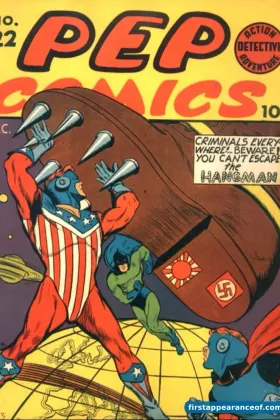
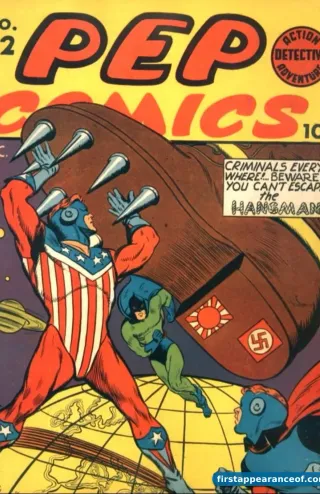
Bob Montana wrote and pencilled the first Archie Andrews strip in Pep Comics #22 (December 1941). John L. Goldwater plotted; Goldwater’s editorial framework had been pursuing a teenage-comedy strip for the MLJ Magazines line (later Archie Comics) and Montana’s pitch landed. Riverdale was established as the setting in the debut. The town was deliberately generic small-town America: a high school, residential neighborhoods, a town center with shops, recognizable American 1940s small-town features. Specifying a state or region would have constrained the strip’s universality; Montana left Riverdale’s location vague intentionally.
The town’s deeper worldbuilding emerged across the early Archie publishing run. Riverdale High School became the central setting under Mr. Weatherbee’s principalship; Pop Tate’s Chock’lit Shoppe became the post-school hangout; the Andrews home, the Lodge mansion (Veronica’s wealthy family home), the Cooper home (Betty’s middle-class home), and the Jones home (Jughead’s family) all became recurring sub-settings. The framework has been continuously developed for eighty-four years.
Bob Montana drew on his own teenage experiences in Haverhill, Massachusetts. Several Riverdale locations (the Chock’lit Shoppe, the high school exterior) loosely resemble Haverhill landmarks of the 1930s and 1940s. The connection is not officially canonical but has been acknowledged by Archie historians. Modern Riverdale is a composite of multiple American small-town references rather than a single real-place adaptation.
The horror-genre reset
Roberto Aguirre-Sacasa wrote Afterlife with Archie #1 (October 2013) with Francesco Francavilla on art. The book reframed Riverdale as a setting that could carry serious horror storytelling: zombie outbreak, supernatural threats, occult elements that the comedy-format Archie books had not used. The framework worked. Afterlife with Archie ran twelve issues across multiple years and established that the Archie cast could function in non-comedic registers.
The reset was structurally important for the eventual CW Riverdale TV series adaptation. Aguirre-Sacasa was the creative figure connecting Afterlife with Archie to the live-action property. The horror-and-mystery framework gave the franchise an entry-point for television audiences who would not have engaged with the comedy-format Archie comics directly.
The CW series
Riverdale (CW, 2017 to 2023) adapted the Archie cast into a teen-noir-mystery framework. Seven seasons. The series’s Riverdale was a darker, more dangerous version of the comic-book town: drug cartels, serial killers, occult conspiracies, a perpetually-troubled local government. The framework drew on Twin Peaks, various 1990s teen-mystery procedurals, and the Aguirre-Sacasa Afterlife with Archie horror register.
The series’s success made the Archie franchise relevant to a 2010s teen-drama audience that the comics alone had not reached. Subsequent Archie publishing has alternated between the traditional comedy-format (Archie & Friends, the gag-strip-derived ongoings) and the darker register (Riverdale tie-in books, various horror anthologies). The franchise’s range across registers is one of the more unusual transitions any Golden Age property has made into the contemporary publishing era.
Collector context
Pep Comics #22 (December 1941) is the canonical Riverdale first-appearance key. CGC 9.0 and above is in the high five to low six figures. The book is Archie Andrews’s first appearance and one of the most consequential Golden Age non-DC, non-Timely first appearances. Riverdale’s first-appearance value is folded into the broader Archie debut value.
Archie Comics #1 (Winter 1942) is the second-tier Riverdale-related Golden Age key. CGC 9.0 and above is in the mid four to low five figures. The book is recognized as the first Archie solo title and as the issue where Riverdale High and the broader Archie cast framework solidified.
Afterlife with Archie #1 (October 2013) trades modestly. CGC 9.8 is in the high two to low three figures. The book is recognized as a Modern Age Archie key and as the foundation for the eventual CW Riverdale series adaptation; collector value reflects the connection.