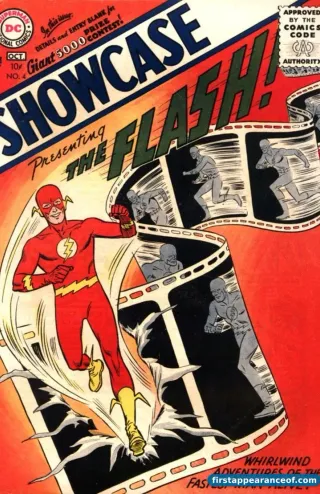
Barry Allen as the Flash on the cover of Showcase #4 (1956), the book credited with starting the Silver Age.

1st Appearance of Barry Allen as the Flash

First Appearance of Flash

Showcase #4

October 1956 · DC · Silver Age

The DC hero whose first appearance started the Silver Age, whose death ended an era, and whose return rewrote the entire DC Universe.

Key Issue

Created by Robert Kanigher · Carmine Infantino · Joe Kubert

By Atomm Updated

The first appearance (1st app) of Barry Allen as the Flash is Showcase #4 (October 1956), created by writer Robert Kanigher, penciller Carmine Infantino, and cover artist Joe Kubert. The issue is widely credited with starting the Silver Age of comics. Barry Allen is the second Flash; the Golden Age original, Jay Garrick, first appeared in Flash Comics #1 (January 1940). Barry's first solo title is The Flash #105 (February 1959), which continued the numbering from Jay Garrick's Flash Comics (#104, final issue, 1949).

Quick Facts

Debut
Showcase #4 (October 1956)
Real name
Bartholomew Henry Allen
Creators
Robert Kanigher (script), Carmine Infantino (interior art, character redesign), Joe Kubert (cover). Jay Garrick's Flash originated the name in Flash Comics #1 (1940).
Publisher
DC Comics
First enemy
Turtle Man (the slow-motion antagonist in the Showcase #4 debut)
First ally
Iris West, Barry's fiancée (and future wife)
Team affiliations
Justice League of America (founding member), Seven Soldiers of Victory (Jay Garrick)

Firsts Timeline

  1. Showcase #4 cover
    First Appearance of Barry Allen as the Flash October 1956

    Showcase #4

    By Robert Kanigher, Carmine Infantino, Joe Kubert

    The single most important DC Silver Age debut. Robert Kanigher scripts; Carmine Infantino pencils interiors; Joe Kubert does the cover. Credited with starting the Silver Age of comics. The Flash is the second superhero to use the name; Jay Garrick debuted in Flash Comics #1 (1940).

    Read the full breakdown
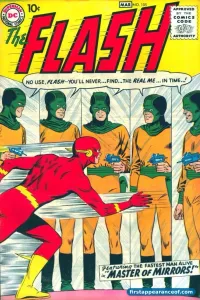
  2. The Flash #105 cover
    First Solo Title (Barry Allen) February 1959

    The Flash #105

    By John Broome, Carmine Infantino

    The Flash series picks up numbering from Flash Comics (which ended with #104 in 1949). John Broome writes; Carmine Infantino continues on art. First appearance of Mirror Master.

    Read the full breakdown

Creation Story

The Flash is the character whose first appearance is credited with starting the Silver Age of comics. By 1956, DC’s superhero line had thinned substantially; Golden Age heroes like the original Flash (Jay Garrick), Green Lantern (Alan Scott), and Hawkman had been shelved years earlier. Editor Julius Schwartz and writer Robert Kanigher proposed reviving the Flash concept with an entirely new character rather than resuming Jay Garrick’s story.

Showcase #4 (October 1956) introduced Barry Allen, a police forensic scientist in Central City who gains super-speed when lightning strikes a chemical shelf in his lab. Kanigher scripted the debut; Carmine Infantino pencilled the interiors and designed the now-iconic red costume with the lightning bolts; Joe Kubert drew the cover. Infantino’s design broke from Jay Garrick’s First Golden Age Flash visually (Garrick wore a Mercury-helmet with silver wings; Barry wears a form-fitting red-and-yellow speedster suit).

Showcase was DC’s try-out anthology title, similar in function to Marvel’s Strange Tales or Tales to Astonish a few years later. The test was whether a superhero book could sell in 1956 at all; readers had largely moved to romance, western, and horror comics. Showcase #4 moved strongly enough that DC greenlit a Flash solo title two years later, and the commercial response kicked off a wave of superhero revivals (Green Lantern, Hawkman, Atom, Justice League) that defines DC’s Silver Age.

The most important single-issue key in DC history

Showcase #4 is arguably the most historically important single comic book DC has ever published. Not because of the character alone, but because of what it started. Every superhero book that followed on either side of the industry through the 1960s traces some commercial debt to Showcase #4 demonstrating that the genre was still commercial in 1956.

High-grade copies have crossed $500,000 at auction. Low-grade reader copies trade in the mid-five-figure range. The book’s collector weight has held steady across every Flash film, television series, and character absence in the publishing history.

Why Barry had to die

Barry Allen’s death in Crisis on Infinite Earths #8 (November 1985) was DC’s single most consequential character death of the 1980s. Marv Wolfman and George Perez designed Crisis as a company-wide reset, eliminating the multiple-Earths structure that had accumulated since The Flash #123 (1961). Barry Allen’s death was not a casual event; it was the editorial statement that DC was committing to permanent, stakes-bearing change.

Wally West, Barry’s sidekick Kid Flash, took over the Flash title in 1986 and held the role for twenty years. Wally is many readers’ Flash rather than Barry; the CW’s television adaptations, the Young Justice animated series, and several comics runs prioritize Wally over Barry. Barry’s 2009 return in The Flash: Rebirth restored him to primary-Flash status and set up the Flashpoint event that rebooted DC’s continuity in 2011.

Collector context

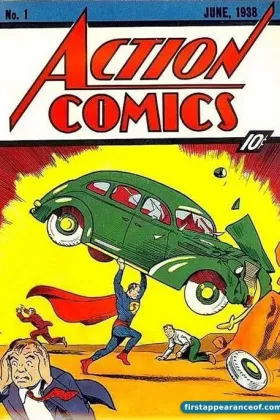
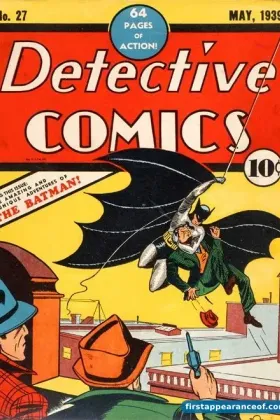
Showcase #4 is the Flash key and a required DC Silver Age book. Its pricing sits alongside Action Comics #1 (Superman) and Detective Comics #27 (Batman) as one of DC’s three foundational Silver Age-era keys, though Action #1 and Detective #27 are Golden Age books and Showcase #4 is the Silver Age counterpart.

Secondary keys: Flash Comics #1 (1940) is Jay Garrick’s first and a Golden Age key. The Flash #105 (1959) is Barry’s first solo title. The Flash #110 (1960) is Wally West’s first appearance as Kid Flash. The Flash #123 (1961) is the Flash of Two Worlds issue and the first DC Multiverse story. The Flash #139 (1963) is the first appearance of Reverse-Flash. Crisis on Infinite Earths #8 (1985) is Barry’s death issue.
Key subsequent appearances

After the debut, these are the issues collectors and historians reach for next.

  1. 1959

    The Flash #105

    First solo title. Continues numbering from Jay Garrick's Flash Comics. First Mirror Master.

  2. 1961

    The Flash #123

    Flash of Two Worlds

    Barry Allen meets Jay Garrick. First appearance of Earth-Two, first DC Multiverse story, first Silver Age Jay Garrick appearance. One of the most consequential issues in DC's publishing history.

  3. 1963

    The Flash #139

    First Professor Zoom

    First appearance of Eobard Thawne, Reverse-Flash, Barry's defining antagonist.

  4. 1985

    Crisis on Infinite Earths #8

    Barry's Death

    Barry Allen dies saving the multiverse. Stays dead for 23 years. Wally West takes over the Flash title in 1986.

  5. 2009

    The Flash: Rebirth #1

    Geoff Johns and Ethan Van Sciver bring Barry Allen back permanently. Sets up Flashpoint.

  6. 2011

    Flashpoint #1

    DC Reboot

    Barry Allen's alternate-timeline event leads into the New 52 line-wide reboot.

In adaptations

Film, TV, animation, and game appearances.

  1. 1990

    The Flash

    TV

    Starring:John Wesley Shipp

    CBS live-action series. One season. Shipp later returned as Jay Garrick on The CW's Flash.

  2. 2014

    The Flash

    TV

    Starring:Grant Gustin

    The CW series. Nine seasons. Defined the modern television Flash and anchored the Arrowverse.

  3. 2023

    The Flash

    Film

    Starring:Ezra Miller

    Andy Muschietti directs. Adapts the Flashpoint arc. Grossed $271M worldwide on a $200M budget. Mixed reception.

Frequently asked questions

The questions readers and collectors ask most.

What is the Flash's first appearance?

Depends on which Flash. Jay Garrick, the Golden Age original, debuts in Flash Comics #1 (January 1940). Barry Allen, the Silver Age Flash and the most recognizable version, debuts in Showcase #4 (October 1956). Wally West as Kid Flash debuts in The Flash #110 (January 1960). Barry Allen's Showcase #4 is the most commonly searched 'first appearance of the Flash' and is the issue credited with starting the Silver Age.

Why is Showcase #4 so valuable?

Showcase #4 is one of the most important single issues in comic book history, not just for DC. It is credited with starting the Silver Age of comics and reviving the superhero genre, which had collapsed commercially by the early 1950s. High-grade copies (CGC 9.0 and above) have crossed $500,000 at auction. Low-grade copies trade in the high five figures. The issue is a required book for any serious DC collection.

Who is the original Flash?

Jay Garrick. Garrick debuted in Flash Comics #1 (January 1940) and was the primary Flash through the Golden Age. Flash Comics ended in 1949. When DC revived the Flash concept in 1956, they introduced Barry Allen as a new character rather than continuing Jay Garrick's story. Barry is the Silver Age Flash, Jay is the Golden Age Flash, and The Flash #123 (1961) introduced Earth-Two to explain how both could coexist. Wally West (Barry's sidekick Kid Flash) and Bart Allen (Impulse) are later additions to the Flash family.

Did Barry Allen really stay dead?

Yes, for twenty-three years of publishing time. Barry Allen died in Crisis on Infinite Earths #8 (November 1985) saving the multiverse. DC kept him dead longer than any other major hero, with Wally West taking over as the primary Flash for over two decades. Geoff Johns and Ethan Van Sciver's The Flash: Rebirth (2009) brought Barry back permanently. The twenty-three-year absence is an outlier in superhero comics and one of the longest commitments to a character death DC has made.

What is Flashpoint and why does it matter?

Flashpoint is a 2011 DC crossover event by Geoff Johns and Andy Kubert in which Barry Allen accidentally rewrites the timeline. The event leads directly into the New 52 line-wide reboot, one of DC's two modern continuity resets (the other is Crisis on Infinite Earths). Flashpoint is also the source material for the 2023 The Flash film.