Creation Story
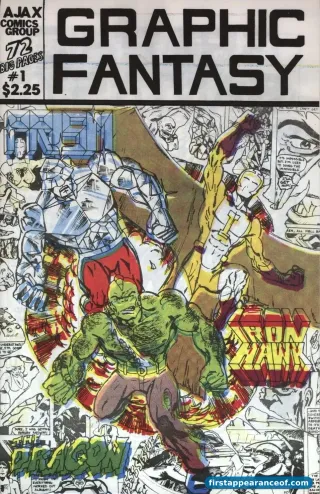
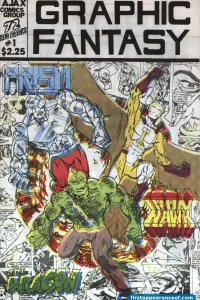
Erik Larsen created the Savage Dragon as a teenage cartoonist in 1982. Graphic Fantasy #1 was a self-published fanzine he produced for distribution at conventions and small comic shops; print run was probably under 200 copies. Larsen continued working on the character through the 1980s while building a career as a freelance penciller at Marvel. He worked on Spider-Man, Wolverine, the Punisher; he was developing the Savage Dragon in parallel, refining the concept and the visual.
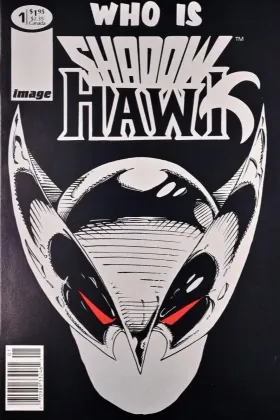
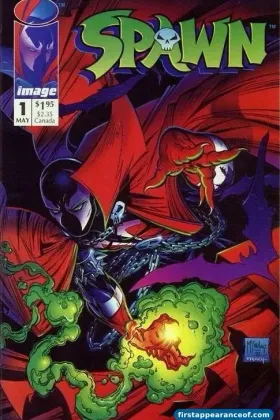
The 1992 Image Comics launch gave Larsen the opportunity to bring the character to a major publishing platform with creator-ownership intact. Larsen was one of the seven founding partners of Image; each founder was contractually committed to launch at least one creator-owned title in the first wave. Savage Dragon #1 launched in July 1992 alongside Spawn, WildC.A.T.s, Youngblood, Cyberforce, Shadowhawk, and Wetworks. The Savage Dragon’s structural difference from the other Image launches was the police-procedural framing: Larsen made the Dragon a Chicago PD officer, which gave the book a setting and ensemble that other Image launches did not have.
Larsen has written and drawn nearly every issue of Savage Dragon since 1992. The book crossed issue #270 in 2024, which makes it one of the longest unbroken single-creator runs in superhero comics history. For comparison, Stan Lee’s Fantastic Four ran from 1961 to 1972 (approximately 100 issues across 11 years). Robert Kirkman’s The Walking Dead ran from 2003 to 2019 (193 issues across 16 years). Larsen on Savage Dragon has run 33+ years and continues. The longevity is the central fact of the book’s history.
The series’s tonal range is broader than most superhero comics. Larsen has alternated between standard superhero action, police procedural, social commentary, comic-book metafiction, and family-drama framing. The Dragon’s son Malcolm took over as the title’s primary lead in Savage Dragon #150 (2009); the father-and-son arc has remained the book’s central framework since. The series has aged in real time: Malcolm was a child when introduced, became a teenager, became an adult, married, became a father himself. Most superhero comics do not allow this kind of generational aging; Savage Dragon does because Larsen owns the title and chooses to.
The 1995 USA Network animated series was the most significant adaptation. Two seasons of Saturday morning animation, with Larsen involved in production. Reception was generally positive within the constraints of 1990s animated TV. The show is considered the strongest 1990s Image Comics animated adaptation. There has been no live-action film or TV adaptation. Larsen has periodically discussed adaptation possibilities; none has progressed.
The character’s collector profile is moderate. Savage Dragon #1 (Image, July 1992) is recognized as one of the seven founding-partner Image launches and is a foundational issue for Image collectors. The print runs were substantial, so survival in high grade is plentiful and prices are moderate. The 1982 Graphic Fantasy #1 self-published precursor is an extreme rarity but is generally treated as a curiosity rather than a tracked collector key. Larsen-signed copies of various milestones (issue #1, #50, #100, #150, #200) trade at premium-over-baseline prices among Larsen-specific collectors.
First Mainstream Appearance and First Image Cover: Savage Dragon #1
The book hit stands in March 1992 with a July 1992 cover date. 24 pages. Cover price was $1.95. The cover by Erik Larsen shows the Savage Dragon in a heroic-superhero pose against a Chicago skyline, with the police-procedural framing visible through the costume choice (no costume, just the Dragon in a tank top and jeans, which became the canonical visual). The composition is more grounded than most 1992 Image launches; Larsen was working in a different aesthetic register than McFarlane or Liefeld.
Print run was high. Image Comics launches in the first wave printed in the 200K to 500K range per first issue; Savage Dragon #1 was on the higher end of that range due to retailer enthusiasm for the Image launch. Survival in high grade is plentiful. CGC 9.8 trades in the low three figures. CGC 9.6 is in the double-digit dollar range. Mid-grade copies are raw-book prices.
The story inside introduces the Dragon to the Chicago Police Department. The Dragon has amnesia; he does not know who he is or where he came from. The first issue establishes the police-procedural framing and the Chicago setting. The OverLord criminal organization is introduced as the early-arc antagonist. Larsen’s writing in the first issue is functional and direct; the deeper character work develops over the next several issues.
For pricing, Savage Dragon #1 is a recognized Image-launch key with moderate market value. The book is among the seven founding-partner Image first issues and is recognized historically. Specialist Image collectors track the book; broader collector markets track it through the series’s long Larsen run rather than through individual issue values. The Graphic Fantasy #1 self-published precursor is too rare for systematic market data; copies that surface trade at fanzine-rarity prices rather than at superhero-key prices.