Creation Story
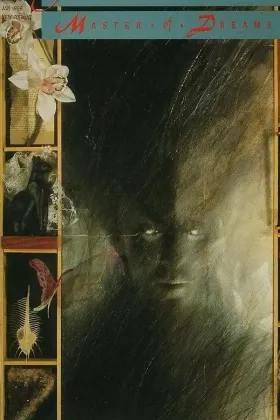
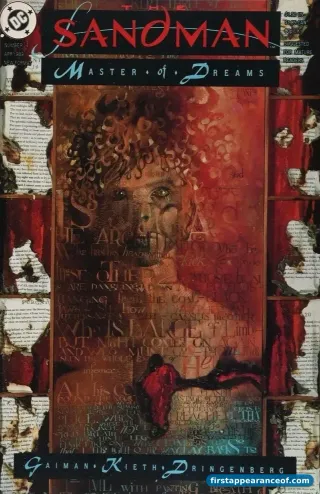
Lucifer Morningstar is Neil Gaiman’s Vertigo Devil. The Sandman #4 (April 1989) introduces the character during Dream’s hunt for his Helm, which had been stolen and eventually ended up in Hell. Lucifer grants Dream an audience, formally dislikes him, and loses to him in a contest of ideas. Sam Kieth and Mike Dringenberg pencil the debut; Malcolm Jones III inks. Dave McKean covers.
Gaiman’s Lucifer is modeled on John Milton’s Paradise Lost rather than on traditional horror-comics devil characters. Milton’s Lucifer is a fallen angel motivated by wounded pride, intellectual resentment, and a specific grievance against God. Gaiman’s version preserves that framework: Lucifer is capable of nobility, is not reducible to pure evil, and is explicitly not “Satan” in the conventional Christian-horror sense. The character’s visual design (tall, beautiful, blond, wearing white) contrasts with every prior Vertigo or horror-comics Devil.
Season of Mists
The Sandman #23 (February 1991) is Lucifer’s defining Sandman moment. The issue opens the Season of Mists arc (Sandman #21 to #28). Lucifer calls in Dream to hand him the key to Hell. He has spent ten billion years running Hell out of pride and intellectual commitment; he’s done. He closes Hell, expels every damned soul into the universe, and walks away. Dream is left holding the key and the political question of who should rule Hell.
The arc is one of the most celebrated stretches of Gaiman’s Sandman run and established Lucifer as a character capable of supporting his own solo work. Kelley Jones pencils the centerpiece issue; the visual framing (Lucifer walking along a beach at dusk) is one of the most-reproduced images in Vertigo.
The Mike Carey era
Lucifer #1 (June 2000) launched a solo Vertigo title by Mike Carey with art by Peter Gross. The book ran 75 issues through 2006, matching Sandman’s page count and establishing a deliberate parallel between the two series. Carey’s Lucifer develops a cosmology around the character’s abandoned divinity, his complicated relationship with his brother Michael, and his eventual decision to create his own universe to run on his own terms. The run is widely regarded as one of Vertigo’s strongest post-Sandman titles.
Sandman Presents: Lucifer (1999) was a three-issue mini-series that Carey wrote as a setup for the ongoing. Both the mini and the ongoing are important collector books.
The Fox / Netflix era
Lucifer (2016 to 2021) on Fox (seasons 1 to 3) and Netflix (seasons 4 to 6) starred Tom Ellis as a substantially softened version of the character. The show relocates the Season of Mists abdication to modern Los Angeles, where Lucifer runs a nightclub (Lux) and consults for the LAPD as a reluctant detective partner. The tonal register is police-procedural-comedy rather than Gaiman’s mythic-horror framing.
The Ellis performance made Lucifer Morningstar a mainstream character at a scale the comics never achieved. First-print copies of The Sandman #4 and Lucifer #1 (2000) both moved sharply on collector markets during the show’s Netflix years.
Collector context
The Sandman #4 is the Lucifer Morningstar first-appearance key and a Vertigo-era collectible. High-grade CGC 9.8 copies have crossed $300 at auction.
Secondary keys: The Sandman #23 (Season of Mists, Lucifer abdicates Hell). Sandman Presents: Lucifer #1 (1999). Lucifer #1 (2000, Mike Carey ongoing launch). The latter three are required reads for any Lucifer-focused collection.