First Appearance

First Appearance of Speed Force

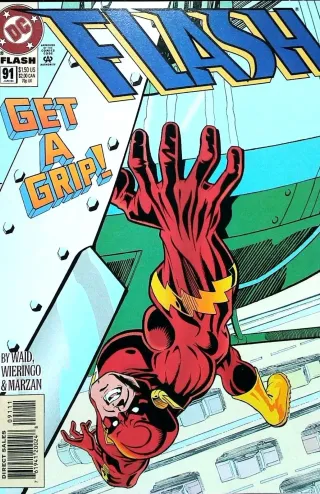
The Flash #91 (1994). Mark Waid's 1994 retroactive cosmology for DC's super-speed characters. The Speed Force is the cosmic energy field that grants speed-based powers to every Flash, every Kid Flash, Quicksilver-equivalent characters in DC, and various Reverse-Flashes. Before 1994, super-speed was treated as a mutation or accident; after 1994, every speedster taps the same shared cosmic source.

By Atomm Updated

The Flash #91 (1994). Mark Waid and Mike Wieringo. The first explicit reference to the Speed Force as the cosmic source of Wally West's powers. The framing retroactively explained super-speed across DC's history.
DC Comics Concept The cosmic source of every Flash's powers.

The Speed Force first appears in The Flash #91 (June 1994), by Mark Waid and Mike Wieringo, as the cosmic energy field that grants super-speed to DC's speedster characters. Before 1994, super-speed was treated as a mutation or accident specific to each speedster; Waid's framing retroactively unified them around one shared cosmic source. The Terminal Velocity arc (The Flash #95-100, 1995) expanded it into a near-sentient entity. Geoff Johns reframed it in The Flash: Rebirth (2009) with Barry Allen as the originating source. The CW's Flash TV series (2014 to 2023) adapted the concept across nine seasons.

Firsts Timeline

  1. First Appearance (Speed Force Reference) June 1994

    The Flash #91

    By Mark Waid, Mike Wieringo

    Mark Waid writes; Mike Wieringo pencils. The first explicit reference to the Speed Force as the cosmic source of Wally West's powers. Earlier Flash stories had treated super-speed as a mutation from the chemical accident in Showcase #4 (Barry Allen) or as inherited from Barry (Wally West). Waid's framing retroactively positioned super-speed as a tap into a universal cosmic energy field that exists outside ordinary physics. The framework expanded across the Waid run and is now canonical across DC publishing.

  2. Speed Force Origins Expanded June 1995

    The Flash: Terminal Velocity

    By Mark Waid, Salvador Larroca

    Mark Waid writes; Salvador Larroca pencils. The Terminal Velocity arc (The Flash #95-100) expanded the Speed Force concept significantly. Wally West merges with the Speed Force at the climax, then returns. The arc establishes that the Speed Force is a sentient or near-sentient cosmic entity rather than just an energy source. Subsequent writers (Geoff Johns especially) built on Terminal Velocity's framework.

  3. Geoff Johns Speed Force Reset June 2009

    The Flash: Rebirth #1

    By Geoff Johns, Ethan Van Sciver

    Geoff Johns writes; Ethan Van Sciver pencils. The Flash: Rebirth six-issue limited series resurrected Barry Allen and reframed the Speed Force around him as the originating source of all DC speedster powers, with subsequent speedsters tapping into the same field Barry first generated. The framework gives Barry retroactive primacy over the Speed Force. The post-Rebirth canonical Speed Force is Johns's framework.

  4. The Flash TV Series October 2014

    The Flash (CW, 2014)

    By Greg Berlanti, Andrew Kreisberg, Geoff Johns

    Greg Berlanti, Andrew Kreisberg, and Geoff Johns. The CW's Flash series adapted the Speed Force concept extensively across nine seasons (2014 to 2023). The series's Speed Force is structurally close to Mark Waid's original framework with elements of the Geoff Johns reset. The series also introduced the Negative Speed Force (the dark counterpart) and various Speed Force adjacent concepts (Still Force, Strength Force, Sage Force) that have fed back into the comics.

What the Speed Force is

Mark Waid introduced the Speed Force in The Flash #91 (June 1994) as a retroactive cosmology to unify DC’s previously-disparate speedster origins. The framing positioned super-speed as access to a cosmic energy field that exists outside ordinary physics, with speedsters acting as conduits rather than as inherent power-bearers. The concept solved a continuity-rationalization problem that DC had been carrying since the 1940s.

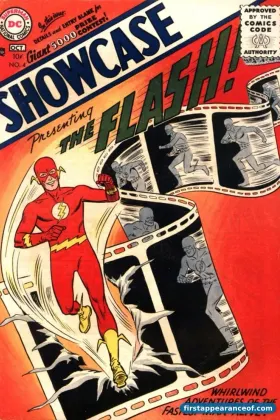
Before 1994, every DC speedster had a different origin. Jay Garrick (Flash, Flash Comics #1, January 1940) got powers from inhaling ‘hard water’ fumes in his lab. Barry Allen (Flash, Showcase #4, October 1956) was struck by lightning while exposed to electrified chemicals. Wally West (Kid Flash, The Flash #110, January 1960) got powers from being struck by the same lightning hitting the same chemicals as Barry. Max Mercury, Johnny Quick, Jesse Quick: each had separate origins. The framework was a mess.

Waid’s Speed Force framework solved the mess by retconning every previous origin into a tap into the same cosmic source. The Speed Force exists outside the normal universe; speedsters are characters whose accidents or mutations gave them access to the field. The framework has been canonical across DC publishing since 1994 and has been accepted by every subsequent writer.

Terminal Velocity and the cosmic-entity framing

The Terminal Velocity arc in The Flash #95 to #100 (March to August 1995) expanded the Speed Force concept significantly. Wally West merges with the Speed Force at the climax (issue #100) and then returns. The arc establishes that the Speed Force is a sentient or near-sentient cosmic entity rather than just an energy source. Wally is the first speedster to consciously interact with the Speed Force as a being.

Waid’s framework after Terminal Velocity treats the Speed Force as both a physics phenomenon and a cosmic entity. Speedsters can communicate with it under certain conditions; the Speed Force has preferences and patterns; entering the Speed Force fully (the “Speed Force trance”) is a mystical experience as well as a physical one. The dual framing has held in DC continuity since 1995.

The Geoff Johns reset

Geoff Johns wrote The Flash: Rebirth (six-issue limited series, 2009) with Ethan Van Sciver as penciller. The series resurrected Barry Allen (who had been dead since Crisis on Infinite Earths in 1985) and reframed the Speed Force around him as the originating source. The post-Rebirth framework positions Barry as the speedster who first generated the Speed Force, with subsequent speedsters tapping into the field Barry created.

The Johns reset was structurally significant. It gave Barry retroactive primacy over the Speed Force and the broader speedster mythology, which had been held by Wally West during the Waid era. The reset has been controversial; Wally West fans considered the framework a demotion of his character, while Barry Allen fans considered it the appropriate centering of the most-recognized Flash. Both readings have evidence. The Johns framework is the post-Rebirth canonical Speed Force.

The CW Flash and the Forces expansion

The CW’s Flash TV series (Greg Berlanti, Andrew Kreisberg, Geoff Johns; 2014 to 2023, nine seasons) adapted the Speed Force extensively. The series’s Speed Force is structurally close to Mark Waid’s original framework with elements of the Johns reset. The show also introduced the Negative Speed Force (the dark counterpart used by Reverse-Flash and Savitar) and explored Speed Force-adjacent concepts that fed back into the comics.

Joshua Williamson’s mid-2010s Flash run (especially the 2017 to 2018 issues) introduced the broader Forces framework: Strength Force, Sage Force, Still Force, plus the Negative Speed Force. The framework expanded the Speed Force concept into a wider cosmology of energy fields. Reception has been mixed. Some readers consider the Forces an over-extension; others appreciate the expanded mythology. The Forces framework is canonical in current DC publishing but is treated as an extension rather than a replacement of the original Speed Force concept.

Collector context

The Flash #91 is the canonical Speed Force first-appearance key. CGC 9.8 trades in the low to mid three figures. Print runs were substantial for a 1994 Flash issue and supply remains plentiful. The book’s collector profile has been stable since the 1994 launch.

The Flash: Rebirth #1 (2009) is the second-tier Speed Force key for the post-2009 reset framing. CGC 9.8 trades at similar prices to The Flash #91. The cover by Ethan Van Sciver is one of the most-recognized modern Flash covers.

The Flash: Terminal Velocity arc (#95-100, 1995) is recognized as a Speed Force expansion key but trades on the broader Waid Flash run pricing rather than as a separable Speed Force collector key.
Frequently asked questions

The questions readers and collectors ask most.

What is the Speed Force's first appearance?

The Flash #91 (June 1994), Mark Waid and Mike Wieringo. The first explicit reference to the Speed Force as the cosmic source of Wally West's powers. There is no precursor; Waid built the concept whole-cloth as a retroactive cosmology to unify DC's previously-disparate speedster origins.

Why did Mark Waid invent the Speed Force?

Continuity rationalization. By 1994, DC had Jay Garrick (Flash, originally got powers from inhaling 'hard water' fumes in 1940), Barry Allen (Flash, originally got powers from a chemical-and-lightning accident in 1956), Wally West (Kid Flash and later Flash, inherited powers from Barry), Max Mercury, Johnny Quick, and several other speed-based characters. Each had a different origin. Waid's Speed Force framework retroactively unified them all around a shared cosmic source, which gave the speedster mythology coherence and gave subsequent writers a pre-built shared cosmology to expand. The framework has been canonical across DC publishing since 1994.

Are there other Forces besides the Speed Force?

Yes, in modern continuity. Joshua Williamson's mid-2010s Flash run introduced the broader 'Forces' concept: Strength Force, Sage Force, Still Force, plus the Negative Speed Force as a dark counterpart. The CW Flash TV series adopted some of these. The Forces framework expanded the Speed Force concept into a wider cosmology of energy fields that grant various powers to specific characters. Reception has been mixed; some readers consider the Forces an over-extension of what was structurally a clean concept, while others appreciate the expanded mythology.

Is The Flash #91 valuable?

Modestly. CGC 9.8 trades in the low to mid three figures. The book is a recognized Modern Age key for the Speed Force first appearance but does not command significant market value compared to most character-debut keys. Print runs were substantial and supply remains plentiful. The book's collector profile has been stable since the 1994 launch. The Flash: Rebirth #1 (2009) trades at similar prices.

Linked characters

1 character that originate in or use this.