What Mega-City One is
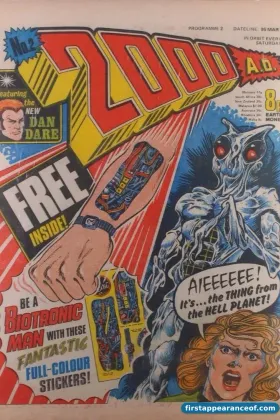
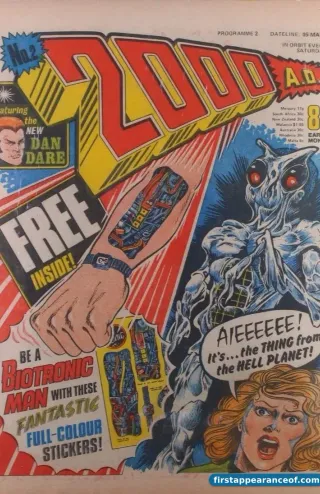
John Wagner wrote and Carlos Ezquerra pencilled the first Judge Dredd strip in 2000 AD Prog #2 (March 1977). Pat Mills had developed the broader 2000 AD anthology format; the Dredd strip was one of multiple new features in the early Progs. The setting was Mega-City One, a post-apocalyptic American mega-metropolis where civilian government has collapsed and Judges (combined police-judge-jury-executioner) maintain order.
The framework was political satire from the start. 2000 AD launched in 1977, deeply embedded in British anxieties about Thatcher-era authoritarianism, American urban decay, and post-nuclear-war geopolitics. Mega-City One was a deliberate exaggeration of where American urban policy seemed to be heading: gigantic apartment blocks (the Mega-Blocks), authoritarian policing without civilian oversight, mass unemployment, recurring riots, and a centralized Judges’ Hall that replaced any democratic government. Wagner and Ezquerra wrote the city as a warning rather than as a setting to admire.
The political satire layered. Subsequent decades of Mega-City One stories explored: economic collapse, the Apocalypse War with the Sov Block (Cold War proxy), the rise and fall of various Chief Judges (each with different political agendas), the city’s relationship with surrounding wasteland (the Cursed Earth) and other mega-cities (Brit-Cit, East-Meg One), and the Judges’ moral compromises with their authoritarian framework. Few superhero settings have sustained political-satire weight as effectively as Mega-City One has across nearly fifty years of continuous publishing.
The recurring destruction cycle
Mega-City One has been partially destroyed and rebuilt multiple times across decades of stories. The most-cited destructions:
- The Apocalypse War (Progs #245-270, 1981). Sov Block attacks Mega-City One. Hundreds of millions die. The city is partially destroyed; the Judges’ authority is challenged. The arc is one of the most-cited Mega-City One storylines and is the foundational Cold War proxy of the Dredd universe.
- Necropolis (Progs #674-699, 1990). The Dark Judges from Deadworld take control of the city. Judge Dredd is in exile during the events. The arc is one of the strongest extended explorations of Mega-City One’s vulnerability.
- The Day The Law Died (Progs #89-108, 1978-1979). Judge Cal seizes control of the Judges and attempts to remake the city under his deranged authority. Earlier example of the recurring authoritarian-corruption framework.
- Day of Chaos (Progs #1789-1812, 2012). Modern destruction event. The city loses approximately half its population to Sov Block bio-weapons.
- Mechanismo, Total War, various subsequent events — Mega-City One has continued to face existential threats across the post-2010 Dredd publishing era.
The destruction-and-rebuild cycle is structurally embedded in the Dredd franchise. Readers expect the city to be partially destroyed or recovering at any given time. The cycle gives Wagner and his collaborators recurring narrative engines for political-stakes storytelling.
Adaptations
Mega-City One has appeared in:
- Judge Dredd (1995 film). Sylvester Stallone in the title role. Widely considered a poor adaptation; the film’s Mega-City One production design was visually ambitious but the adaptation choices were poor. Stallone’s Dredd took off his helmet, which is a structural violation of the canonical Judge Dredd character.
- Dredd (2012 film). Pete Travis directs; Karl Urban as Dredd; Mark Digby designs production. Widely considered the best live-action Judge Dredd adaptation. The film’s Mega-City One is a single mega-block (Peach Trees) where most of the action occurs; the broader city is established as backdrop. Urban’s Dredd has remained the canonical screen Dredd.
- Various radio dramas, video games, and proposed TV series. Long-running Judge Dredd Megazine spinoff anthology has continued the franchise alongside the main 2000 AD title.
Collector context
2000 AD Prog #2 is the canonical first-appearance key for Mega-City One and Judge Dredd. UK comic-book market is structured differently from US market; CGC slabbing of 2000 AD progs is common among UK specialist collectors but rare in mainstream US grading. CGC 9.4 trades in the high three to low four figures when copies surface in graded form. UK collector communities track ungraded high-grade copies more aggressively.
The Apocalypse War run (Progs #245-270, 1981) trades as a collector arc. High-grade complete runs are recognized within UK Dredd fan communities and command modest premiums.
The Dredd franchise has not generated the same mainstream Modern Age collector momentum as US-based franchises despite the 2012 film and the long-running publishing history. The collector profile remains specialist rather than mainstream.