What Spawn’s Hell is
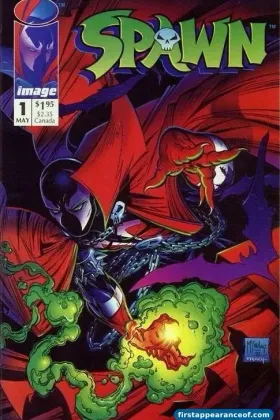
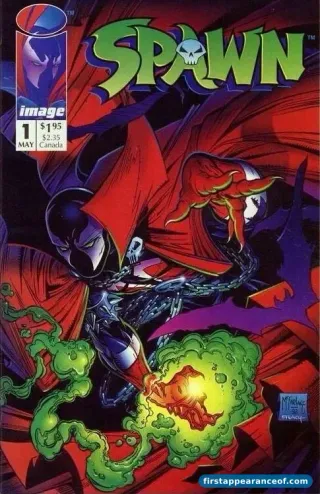
Todd McFarlane introduced the Spawn-cosmology Hell in Spawn #1 (May 1992) as part of the Image Comics launch. The framework is structurally distinct from prior superhero comic Hells. Most superhero Hells (DC’s various John Constantine-related underworlds, Marvel’s Mephisto-ruled domains, the Hellfire Club’s namesake imagery) lean on Christian-tradition framing where Hell is a metaphysical realm of post-mortem moral judgment. The Spawn cosmology preserves Christian-tradition imagery (fire, demons, eternal punishment, the broad visual register) but reframes the structural function.
McFarlane’s Hell is a militarized cosmic-political entity. Malebolgia leads the realm and recruits Hellspawn (resurrected human souls turned into demonic warriors) for an eventual war against Heaven. The Hellspawn are soldiers rather than sinners; their resurrection is a strategic asset rather than a moral judgment. The war between Heaven and Hell is a cosmic-political conflict with strategic stakes, not a metaphysical drama about post-mortem sorting.
Al Simmons, a US government assassin killed in the line of duty, signs the contract with Malebolgia in Spawn #1 to be allowed to return to Earth and see his wife Wanda one more time. The contract makes him a Hellspawn. He returns to Earth five years later (Wanda has remarried) and discovers that his powers come with finite reserves of Hellplasm; once depleted, he must return to Hell. The countdown clock and the Hellspawn-rebellion-against-Malebolgia framework drive the early Spawn run.
The cosmology expansion
Frank Miller wrote Spawn #11 (June 1993) as a guest-writer issue. Miller’s framing significantly expanded the Heaven-and-Hell war structure, established more of the cosmic-political stakes, and introduced framework elements that subsequent Spawn writers built on. Miller’s brief involvement gave the Spawn cosmology weight that was unusual for Image-launch cosmologies of the early 1990s; most Image titles had thinner mythologies that emerged piecemeal across runs rather than being seeded by a major outside-writer’s contribution.
Spawn #100 (October 2000) by Todd McFarlane and Greg Capullo codified the deeper Hellspawn mythology. The framework of multiple Hellspawn across history (Spawn is one of many; previous Hellspawn predate Al Simmons across multiple historical periods), the Phlebiac Brothers (recurring antagonists), the various levels of Hell’s bureaucracy, and the broader cosmic-political stakes all got formal establishment.
The Spawn cosmology has continued expanding across thirty years of publishing. Recent Spawn titles (Spawn’s Universe, the Capullo-McFarlane and Stewart-McFarlane runs of the 2020s) have layered additional cosmic-political detail onto the framework. The basic Heaven-and-Hell-at-war structure has held; the specific demons, hierarchies, and political dynamics have shifted with editorial direction.
The Greenworld
Spawn #11 introduced the Greenworld as a neutral third realm in the Spawn cosmology. The Greenworld is structurally outside the Heaven-Hell binary, accessible to certain magical characters and aligned with the natural world rather than with cosmic-political factions. The framework gave the Spawn cosmology a third axis beyond the Heaven-Hell war and provided narrative flexibility for stories that didn’t fit cleanly into either realm.
The Greenworld concept has been used intermittently across the Spawn franchise. Some runs lean heavily on it; others ignore it. The framework is canonical but not load-bearing; most Spawn stories work without referencing the Greenworld.
Adaptations
Hell has appeared in nearly every Spawn adaptation:
- Spawn (1997 film). Mark A.Z. Dippé directs. Theatrical Spawn film with Michael Jai White. The film’s Hell sequences used CGI that has aged poorly but were visually ambitious for 1997.
- Spawn (HBO animated series, 1997-1999). Three-season adult-animation series. Eric Radomski’s visual treatment of Hell drew heavily on the comic-book imagery while adapting it for television. Widely considered one of the strongest comic-book animated adaptations of the 1990s.
- Various recent video games and animated shorts. The Spawn cosmology has appeared in multiple media properties across decades.
The long-anticipated 2024-2025 Todd McFarlane theatrical reboot has been in development for years; the Hell cosmology will presumably be a major element when the project reaches production.
Collector context
Spawn #1 is the canonical Hell first-appearance key for the Spawn cosmology. CGC 9.8 trades in the high three to low four figures. The book is one of the seven founding-partner Image Comics launches and the most successful single Image launch by sustained sales (approximately 1.7 million copies of the first issue). The Hell first-appearance value is folded into the broader Spawn first-appearance value; there is no separable Hell-cosmology market premium.
Spawn #11 (Frank Miller’s expansion of the Heaven-Hell framework) trades modestly, in the low to mid three figures at CGC 9.8. The book is recognized as a creator-significance key (Frank Miller’s Spawn appearance is one of his more unusual 1990s collaborations) but does not command Hell-specific premium.
Spawn #100 (the deeper mythology codification) trades in similar ranges. The book is recognized as a milestone issue but is one of many in the long Spawn run.